
×
Remove product
Remove item from cart?

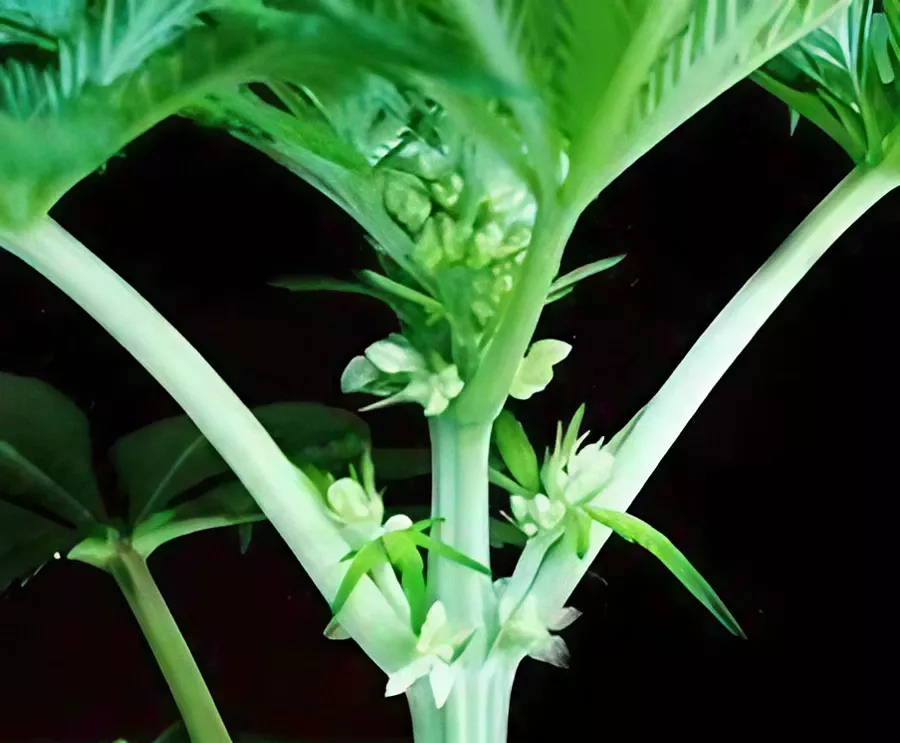
The stamen represents the male reproductive organ in cannabis plants, consisting of anthers that produce and release pollen supported by thin filaments, playing a crucial yet often unwanted role in modern cannabis cultivation. These structures appear on male plants and occasionally on hermaphroditic females, serving the biological imperative of sexual reproduction that directly opposes the sinsemilla (seedless) cultivation goals dominating commercial markets. Understanding stamen development, identification, and management proves essential for cultivators, as a single overlooked male flower can pollinate entire rooms of female plants, transforming valuable sinsemilla crops into seeded flower with dramatically reduced market value.
The biological sophistication of cannabis stamens reflects millions of years of evolutionary refinement, producing lightweight pollen capable of traveling miles on air currents to find receptive female flowers. Each stamen consists of paired anthers containing pollen sacs (microsporangia) that split open when mature, releasing clouds of pollen grains carrying male genetic material. The timing of stamen development, environmental triggers for pollen release, and the remarkable quantity of pollen produced by single plants demonstrate cannabis’s investment in reproductive success. This reproductive efficiency that ensures species survival creates significant challenges for cultivators seeking to prevent any pollination.
Contemporary perspectives on stamens in cannabis cultivation reveal a paradox where these essential reproductive structures are simultaneously vital for breeding programs and catastrophic for commercial flower production. While most growers view stamens as threats requiring immediate elimination, breeders carefully cultivate and preserve exceptional male plants based partly on stamen characteristics that may correlate with desirable offspring traits. The industry’s focus on feminized seeds and female-only cultivation has relegated stamens to specialized breeding contexts, yet understanding their biology remains crucial for quality control, phenotype selection, and preventing accidental pollination that could devastate commercial operations.
Anatomical components of cannabis stamens follow typical angiosperm patterns with modifications adapted to wind pollination strategies, lacking the showy petals of insect-pollinated flowers. The filament, typically 3-4mm in length, positions anthers optimally for pollen dispersal while remaining flexible enough to move with air currents. Anthers develop as bilobed structures containing four microsporangia where pollen mother cells undergo meiosis producing haploid microspores. The connective tissue joining anther lobes contains vascular bundles supplying nutrients during pollen development. Dehiscence occurs through specialized stomium cells that dry and split, creating openings for pollen release. Mature stamens hang pendulously from nodes, maximizing exposure to air currents. The entire structure demonstrates remarkable efficiency in pollen production and dispersal mechanisms.
Pollen development within anthers follows precise developmental stages from microspore mother cells through mature pollen grain formation, requiring specific environmental conditions and timing. Microsporogenesis begins with diploid cells undergoing meiosis, producing tetrads of haploid microspores within protective callose walls. Individual microspores separate and develop thick exine walls composed of sporopollenin, providing exceptional environmental resistance. The vegetative cell and generative cell form through mitotic division, with the latter eventually producing two sperm cells. Pollen maturation coincides with anther wall degradation and stomium differentiation. Nutrient accumulation prepares pollen for the journey to female flowers and subsequent germination. Development typically requires 2-3 weeks from initiation to release under optimal conditions. This complex process ensures viable pollen capable of surviving transport and successfully fertilizing distant flowers.
Microscopic features of cannabis pollen reveal adaptations for wind dispersal and species identification, with characteristic size, shape, and surface patterns distinguishing it from other airborne pollen. Cannabis pollen grains measure approximately 25-30 micrometers in diameter, appearing spherical with slight flattening at germination pores. The exine surface displays fine reticulate patterns visible under electron microscopy, creating species-specific fingerprints. Three germination pores (tricolporate) provide exit points for pollen tube emergence upon landing on receptive stigmas. The intine layer beneath contains proteins and enzymes necessary for germination. Pollen grain density allows extended atmospheric suspension while remaining heavy enough for eventual settling. These microscopic characteristics enable forensic identification and air quality monitoring while demonstrating evolutionary optimization for wind pollination.
Pollen production capacity of individual cannabis plants astounds with single males potentially releasing billions of pollen grains over their flowering period, ensuring reproductive success despite wind dispersal inefficiency. Peak production occurs 2-3 weeks after flowering initiation when multiple nodes simultaneously bear mature stamens. Daily pollen release follows circadian rhythms with maximum dispersal during morning hours when humidity drops and air movement increases. A single flower cluster may contain 50-100 stamens, each anther producing thousands of pollen grains. Large males in optimal conditions might generate 500 million to 1 billion total pollen grains. This prolific production compensates for the extremely low probability of any individual grain reaching receptive stigmas. Evolution favored quantity over precision in cannabis’s wind pollination strategy. Understanding production magnitude emphasizes why single males threaten entire cultivation facilities.
Environmental triggers for stamen development and pollen release involve complex interactions between photoperiod, temperature, humidity, and plant stress responses. Short-day photoperiods initiate flowering in most cannabis varieties, with males typically showing sex 1-2 weeks before females. Temperature fluctuations between day and night promote anther maturation and dehiscence. Low humidity conditions favor pollen release by causing anther tissues to dry and split. Mechanical disturbance from wind or movement can trigger synchronous pollen release from mature anthers. Stress factors including nutrient deficiencies, root binding, or irregular photoperiods may induce hermaphroditic stamen development in genetic females. Circadian rhythms influence daily pollen release timing optimizing for atmospheric conditions favoring dispersal. These environmental responses ensure pollen release when conditions maximize successful fertilization probability.
Genetic factors influencing stamen characteristics vary between cultivars, affecting everything from development timing to pollen viability and production quantity. Some lines show strong sexual stability rarely producing hermaphroditic flowers, while others readily develop stamens under minimal stress. Early-flowering males may indicate similar traits in female offspring, valuable for breeding faster-maturing varieties. Pollen viability duration varies genetically, with some lines producing longer-lived pollen enabling extended storage for breeding. Anther color ranges from yellow to purple, potentially correlating with other desirable traits. Stamen clustering patterns and density show heritable variation affecting pollen production efficiency. Recessive genes for monoecy (hermaphroditism) persist in many populations despite selection pressure. Understanding genetic influences helps breeders select superior males and predict offspring characteristics based on stamen observations.
Early detection strategies for stamens require vigilant monitoring during pre-flowering and early flowering stages when sexual characteristics first become visible. Pre-flowers appearing at nodes between stipules provide earliest sex indicators, with male pre-flowers showing small, round, ball-like structures lacking pistils. Males typically reveal sex 7-14 days before females under identical conditions, providing early warning opportunities. Experienced growers recognize subtle differences in plant structure, with males often showing greater internodal spacing and less complex branching. Daily inspection during weeks 1-3 of flowering catches developing stamens before pollen release. Magnification tools help identify ambiguous pre-flowers preventing costly mistakes. Some cultivators maintain separate pre-flowering areas for sex determination before introducing plants to main flowering rooms. These early detection practices prevent pollination disasters while minimizing resource waste on unwanted males.
Removal protocols for male plants and hermaphroditic flowers require careful handling to prevent accidental pollen dispersal that could contaminate entire facilities. Identification triggers immediate but calm response avoiding panicked movements that spread pollen. Spraying water on suspected males before removal helps prevent pollen from becoming airborne during handling. Plastic bags placed over entire plants before cutting contain any mature pollen. Removal during dark periods when stomata close may reduce pollen release. Hermaphroditic flowers require surgical removal with sterilized tools, monitoring surrounding areas for additional male flowers. Disposal methods must prevent pollen escape, with composting only after thorough saturation. Staff training emphasizes proper protocols as single mistakes can cost thousands in lost crops. Post-removal cleaning includes air filtration and surface disinfection removing residual pollen.
Prevention strategies for unwanted stamen development focus on environmental stability and genetic selection, as stress-induced hermaphroditism represents the primary threat in female-only cultivation. Consistent photoperiods without light leaks prevent confusion triggering survival reproduction responses. Temperature maintenance within optimal ranges reduces thermal stress promoting sexual stability. Nutrient balance throughout flowering prevents deficiencies known to induce male flowers. Gentle training techniques avoid mechanical stress that can trigger hermaphroditism in sensitive varieties. Genetic selection favors sexually stable lines showing no hermaphroditic tendencies across multiple stress tests. Feminized seeds reduce but don’t eliminate risks, as they may carry increased hermaphroditic susceptibility. Regular inspection throughout flowering catches early male flowers before pollen release. Understanding individual variety stress responses helps anticipate and prevent hermaphroditic triggers.
Breeding program utilization of stamens extends beyond simple pollen donation to include selection for specific male traits potentially influencing offspring quality. Exceptional males receive similar evaluation scrutiny as females, examining vigor, structure, disease resistance, and trichome production on leaves and stems. Stamen characteristics like clustering density, anther size, and pollen production volume may correlate with offspring traits. Some breeders report males with pleasant aromas producing more aromatic female offspring. Pollen storage techniques enable preserving exceptional male genetics indefinitely through cryogenic freezing. Controlled pollination using collected pollen allows precise crosses without maintaining living males. Male selection represents half the genetic contribution yet receives disproportionately less attention than female selection. Advanced breeding programs maintain extensive male libraries recognizing their crucial role in cultivar development. These applications position stamens as valuable tools rather than simple threats.
Pollen collection and storage technologies enable breeding programs to preserve and utilize male genetics across time and geographic distances. Collection timing targets anthers just before natural dehiscence, maximizing viability while preventing loss. Desiccation using silica gel or controlled low-humidity environments removes moisture extending storage life. Cryogenic preservation in liquid nitrogen enables decades-long storage maintaining high viability. Specialized containers prevent contamination while allowing gas exchange during freezing. Viability testing through fluorescent staining or germination assays confirms storage success. International exchange of pollen faces fewer restrictions than seeds or plants, facilitating genetic diversity. Pollen banking creates genetic insurance against loss of valuable male lines. Commercial services offer pollen storage for breeders lacking facilities. These technologies transform stamens from temporary seasonal resources to permanent genetic assets.
Research applications utilizing stamens explore fundamental cannabis biology questions from sex determination mechanisms to evolutionary relationships between populations. Pollen morphology studies reveal taxonomic relationships and geographic origins of different cannabis populations. Gene expression analysis in developing stamens identifies sex determination pathways potentially enabling sex manipulation. Pollen allergen research addresses occupational health concerns in cultivation facilities. Climate change impact studies examine how environmental shifts affect pollen production and viability. Forensic applications use pollen analysis for linking cannabis samples to geographic origins. Evolutionary biology research tracks pollen-mediated gene flow between wild and cultivated populations. Biotechnology applications explore using pollen for transformation techniques introducing novel traits. These research directions position stamens as valuable study subjects advancing cannabis science beyond immediate cultivation concerns.

