
×
Remove product
Remove item from cart?

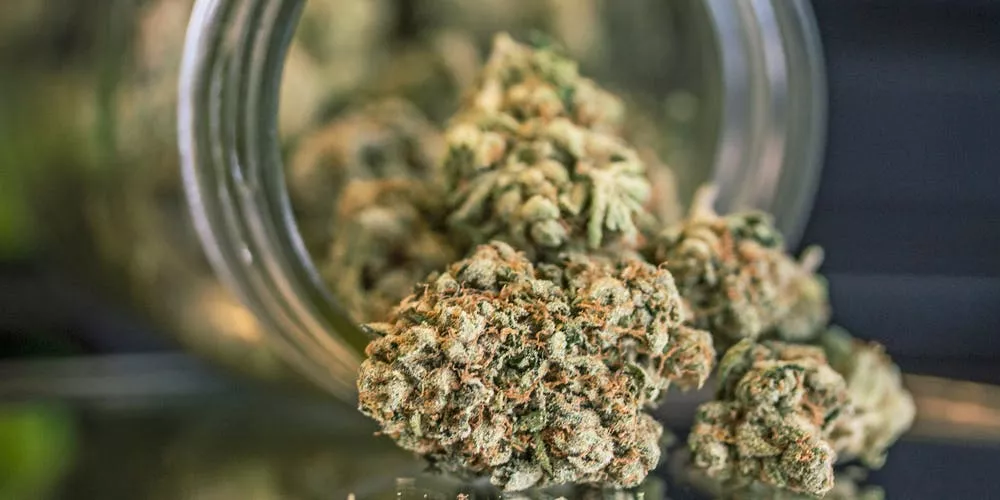
QP, abbreviated from “quarter pound,” represents a significant weight measurement in cannabis commerce equaling approximately 113.4 grams or 4 ounces, occupying a crucial position between personal use quantities and commercial wholesale volumes. This measurement emerged from traditional imperial weight systems adapted by cannabis culture, where pounds and ounces became standard units despite most global commerce utilizing metric measurements. The QP quantity historically marked the threshold between casual dealers and serious suppliers in prohibition markets, representing enough product to supply multiple customers while remaining manageable for individual transport and storage. In contemporary legal markets, QP measurements persist in wholesale transactions, interstate commerce, and informal culture even as regulatory frameworks often mandate metric reporting.
The economic significance of QP transactions extends beyond simple weight measurement to encompass pricing structures, risk assessments, and market dynamics that shape cannabis commerce from cultivation through retail distribution. Traditional pricing models show significant per-unit discounts at QP quantities compared to smaller purchases, reflecting reduced transaction costs and risks for suppliers. This price break point made QPs attractive for small-scale dealers who could profit from the wholesale-retail spread while managing inventory risks. Modern legal markets maintain similar pricing structures, with QP quantities often representing minimum wholesale orders between licensed businesses. Understanding QP economics provides insights into cannabis market mechanics, from cultivation planning through consumer pricing.
Cultural persistence of QP terminology in legal cannabis markets demonstrates how prohibition-era practices continue influencing contemporary commerce, creating linguistic bridges between traditional and regulated markets. The term carries cultural weight beyond its mathematical definition, evoking traditions of underground commerce while adapting to legal frameworks requiring precise tracking and reporting. This terminology persistence creates interesting dynamics where legal businesses must translate between cultural terms and regulatory requirements, often listing products in grams while negotiating in pounds and ounces. The QP measurement thus serves as a cultural artifact preserving cannabis history while facilitating communication between diverse market participants who share common linguistic heritage despite operating in vastly different legal contexts.
Mathematical precision in QP measurements requires understanding conversions between imperial and metric systems, with one QP equaling exactly 113.398 grams or 4.000 ounces, though practical applications often round to 113 or 114 grams. This conversion complexity creates opportunities for confusion or manipulation, particularly when transitioning between systems during transactions. Digital scales used in legal markets typically display to 0.01-gram precision, revealing fractional discrepancies in traditional measurements. The exact QP weight becomes critical in regulated markets where compliance depends on precise inventory tracking. Some jurisdictions require dual labeling showing both imperial and metric weights. Rounding conventions vary by market, with some accepting 112 grams as a QP while others insist on full weight. These mathematical nuances impact pricing, compliance, and inventory management across supply chains.
Historical weight variations in QP measurements reflect regional differences, market conditions, and cultural practices that created localized standards sometimes deviating from mathematical precision. Traditional markets often employed “heavy” or “light” QPs, with trusted suppliers providing 115-120 grams to account for moisture loss and maintain customer relationships. Compressed products might measure differently than loose flower, creating weight versus volume discrepancies. Some regions developed unique standards like the “baker’s QP” including extra weight similar to a baker’s dozen. International variations complicated cross-border underground commerce where metric countries interpreted QPs differently. These historical variations influence modern expectations, with some consumers expecting “heavy” bags while others accept exact weights. Understanding regional weight traditions helps businesses navigate customer expectations rooted in prohibition-era practices.
Scale accuracy requirements for QP measurements in legal markets mandate regular calibration, certified equipment, and documentation procedures ensuring transaction precision that protects both businesses and consumers. Commercial scales must meet National Type Evaluation Program (NTEP) certification for legal trade, with accuracy requirements typically ±0.1% of measured weight. At QP quantities, this allows maximum 0.11-gram variations. Calibration procedures using certified weights must occur daily or per shift. Environmental factors including temperature, vibration, and electromagnetic interference affect scale accuracy. Some jurisdictions require witnessed calibration by state inspectors. Documentation requirements include calibration logs, scale certificates, and maintenance records. These technical requirements represent significant operational overhead compared to prohibition markets’ casual weighing practices, illustrating how legalization introduces complexity while enhancing consumer protection.
Container selection for QP quantities balances product protection, regulatory compliance, and practical handling considerations while maintaining quality through supply chain movements. Traditional turkey bags remain popular for their durability and static-resistant properties, though many legal markets prohibit non-child-resistant packaging. Vacuum-sealed bags maximize space efficiency while potentially compromising trichome integrity. Hard-sided containers protect flower structure but increase shipping volumes and costs. Nitrogen-flushed packaging extends shelf life for long-distance transport. Humidity control integration becomes crucial at QP volumes where moisture migration affects entire batches. Some operations use intermediate bulk containers (IBCs) designed specifically for cannabis. Package sizing must accommodate natural volume variations between dense and fluffy flower varieties. These packaging decisions significantly impact product quality, compliance costs, and operational efficiency.
Storage protocols for QP quantities require environmental controls preventing degradation while maintaining compliance with security and tracking requirements that vary significantly across jurisdictions. Temperature control between 60-70°F prevents terpene evaporation and cannabinoid degradation. Relative humidity maintenance at 55-62% prevents both overdrying and mold growth. Light exclusion through opaque containers or dark storage areas preserves cannabinoid potency. Air exchange prevention minimizes oxidation while avoiding anaerobic conditions. Security requirements often mandate locked, limited-access storage areas with surveillance. Inventory tracking systems must account for moisture loss over time. Some facilities employ automated storage and retrieval systems for efficiency. Insurance considerations influence storage density and segregation practices. These storage requirements represent significant infrastructure investments compared to prohibition-era practices of minimal climate control.
Transportation considerations for QP quantities encompass regulatory compliance, security protocols, and quality maintenance during movement between licensed facilities or to end consumers where permitted. Manifest requirements typically detail exact weights, batch numbers, and laboratory results for traceability. Temperature-controlled vehicles prevent quality degradation during transport. Security protocols may include sealed containers, GPS tracking, and specific route requirements. Multi-state transportation involves complex compliance with varying state regulations. International transportation, where legal, requires import/export documentation and potential fumigation. Driver requirements often include background checks and specific licensing. Insurance coverage for QP-value shipments influences transportation methods and costs. Chain of custody documentation ensures accountability throughout distribution. These transportation complexities illustrate how legalization transforms simple prohibition-era car trips into highly regulated logistics operations.
Wholesale pricing dynamics at QP levels reveal fundamental cannabis market mechanics where volume discounts, quality tiers, and seasonal fluctuations create complex pricing matrices affecting entire supply chains. Traditional markets established 20-30% discounts for QP purchases compared to ounce pricing, reflecting reduced transaction costs and risks. Legal markets maintain similar structures though with compressed margins due to taxation and compliance costs. Quality tiers from “bottom shelf” to “top shelf” show 200-300% price spreads at QP levels. Seasonal oversupply during harvest periods can cut QP prices by 50% or more. Contract pricing between cultivators and retailers often uses QP benchmarks. Spot market volatility affects QP pricing more dramatically than smaller quantities. Understanding these wholesale dynamics helps predict retail pricing and market stability.
Market arbitrage opportunities historically existed between regions with different supply-demand dynamics, though legalization’s patchwork nature creates new forms of price disparities and market inefficiencies. Prohibition-era arbitrage moved QPs from cultivation regions to urban markets for substantial profits. Legal market fragmentation creates similar opportunities between states, though regulatory barriers prevent direct arbitrage. Price differences of 100-200% for identical quality exist between oversupplied and undersupplied legal markets. Some businesses leverage these disparities through strategic multi-state operations. Black market persistence partially stems from arbitrage opportunities between high-tax legal markets and prohibition states. International price disparities, where legal, create import/export opportunities. These arbitrage dynamics influence investment decisions and market development patterns across the cannabis industry.
Economic modeling of QP transactions provides insights into cannabis market functionality, revealing elasticity patterns, market depths, and price transmission mechanisms throughout vertical supply chains. Demand elasticity at QP levels proves lower than retail quantities, suggesting wholesale buyers maintain purchases despite price fluctuations. Supply elasticity varies seasonally with outdoor harvest floods. Price transmission from wholesale QP rates to retail eighth-ounce pricing shows 3-6 month lags. Market depth analysis reveals how many QPs trade at various price points, indicating market liquidity. Financial modeling uses QP metrics for cultivation facility planning and inventory optimization. These economic insights derived from QP-level analysis inform policy decisions, investment strategies, and business planning throughout the cannabis industry.
Legal possession thresholds rarely accommodate QP quantities for personal use, creating clear distinctions between individual consumption and commercial activity that influence enforcement priorities and sentencing guidelines. Most legal states limit personal possession to 1-2 ounces, making QP possession presumptively commercial. Medical programs sometimes allow higher limits but rarely approaching QP levels. Home cultivation allowances based on plant counts may yield QP quantities, creating gray areas in possession laws. Interstate transportation of QPs remains federally illegal regardless of state laws. Asset forfeiture risks increase dramatically at QP quantities. Sentencing enhancements for quantities exceeding personal use thresholds can transform misdemeanors into felonies. These possession limits reflect ongoing tensions between personal freedom and commercial regulation in cannabis policy.
Commercial licensing requirements for QP-level transactions typically mandate specific business licenses, tracking systems, and compliance protocols that distinguish legal wholesale operations from unauthorized distribution. Cultivation licenses authorize QP production but may limit sales to licensed processors or retailers. Distribution licenses specifically cover QP-quantity transportation between facilities. Retail licenses generally prohibit QP sales to consumers. Microbusiness licenses sometimes allow vertical integration at QP scales. Tracking requirements demand seed-to-sale documentation for every QP movement. Testing obligations ensure QPs meet safety standards before transfer. Financial regulations restrict cash transactions at QP values. These licensing frameworks create legal pathways for QP commerce while maintaining strict boundaries against diversion.
Enforcement patterns around QP quantities reveal law enforcement priorities, prosecutorial discretion, and evolving attitudes toward cannabis commerce across different jurisdictions and political climates. Federal enforcement historically targeted QP-level operations as trafficking enterprises. State enforcement varies widely, from aggressive prosecution in prohibition states to regulatory compliance focus in legal markets. Border regions see heightened enforcement for QP transportation. Rural cultivation areas experience seasonal enforcement surges. Prosecutorial discretion often hinges on QP quantities distinguishing users from dealers. Civil asset forfeiture frequently targets QP-level operators. Racial disparities in enforcement persist despite legalization progress. These enforcement patterns influence market participant behavior, business strategies, and ongoing policy reform efforts.

