
×
Remove product
Remove item from cart?

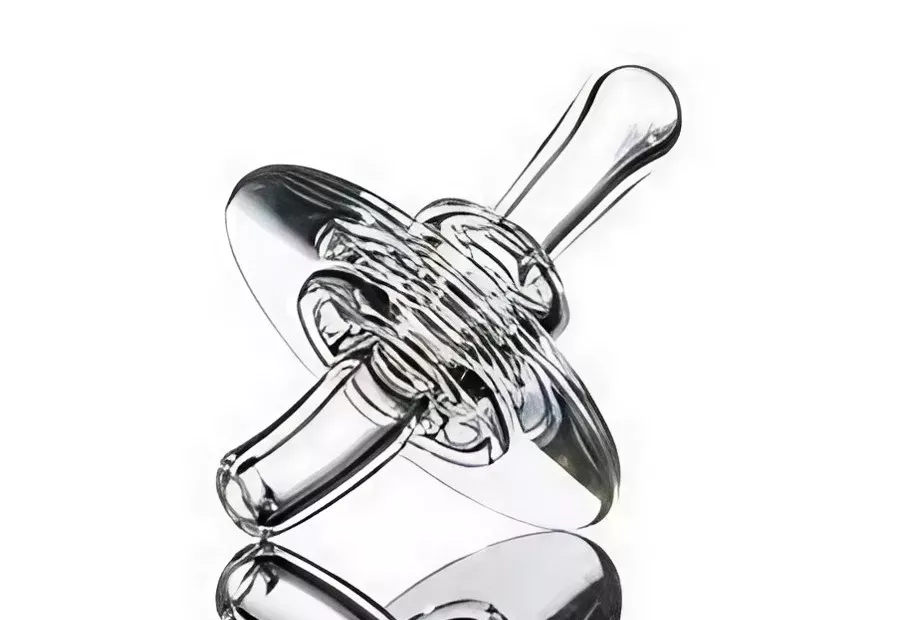
Directional airflow in cannabis contexts refers to the engineered movement of air in specific patterns through cultivation facilities, consumption devices, or processing equipment to optimize environmental conditions, smoke dynamics, or extraction efficiency. This controlled air movement principle applies across multiple cannabis applications, from massive commercial grow rooms requiring precise climate control to intricate water pipe percolators directing smoke through specific paths. Understanding and implementing directional airflow represents a critical technical competency as the cannabis industry professionalizes, moving beyond passive ventilation toward sophisticated engineering that maximizes product quality, operational efficiency, and user experience.
The physics of directional airflow involves managing pressure differentials, velocity vectors, and turbulence patterns to achieve desired outcomes whether cooling a thousand-plant canopy, creating optimal percolation in a dab rig, or preventing contamination in processing facilities. In cultivation, directional airflow prevents microclimates, strengthens stems through mechanical stress, and facilitates transpiration essential for nutrient uptake. Within consumption devices, directed air or smoke flow creates cooling effects, filtration opportunities, and unique sensory experiences. Processing applications leverage directional airflow for everything from terpene recovery in extraction systems to preventing cross-contamination in packaging areas.
Contemporary significance of mastering directional airflow extends throughout the cannabis value chain as operations scale and quality standards rise to meet regulatory requirements and consumer expectations. Cultivation facilities investing millions in environmental controls rely on proper airflow design to prevent crop losses from mold or heat stress. Consumption device manufacturers differentiate products through innovative airflow engineering creating smoother, cooler hits. Extract producers optimize airflow in vacuum ovens and recovery systems maximizing efficiency while preserving delicate compounds. Understanding directional airflow principles, implementation strategies, and optimization techniques proves essential for cannabis professionals across disciplines, as proper air movement often determines the difference between success and failure in increasingly competitive markets where environmental control, product quality, and operational efficiency directly impact profitability.
Pressure differential creation drives directional airflow by establishing high and low pressure zones that force air movement along desired paths following fundamental physics laws. In cannabis cultivation, exhaust fans create negative pressure pulling fresh air through intake vents, establishing predictable flow patterns across plant canopies. Consumption devices utilize user-created vacuum pressure drawing smoke or vapor through engineered pathways. Processing equipment employs both positive and negative pressure systems controlling product movement and preventing contamination. The magnitude of pressure differences determines flow velocity, with larger differentials creating stronger directional movement. Understanding pressure relationships enables system design predicting flow patterns before implementation. Computational fluid dynamics modeling helps visualize complex pressure fields in large spaces, optimizing fan placement and vent positioning.
Laminar versus turbulent flow characteristics significantly impact directional airflow effectiveness in different cannabis applications requiring specific flow regimes. Laminar flow provides smooth, parallel air movement ideal for cleanroom environments preventing particle suspension and ensuring uniform conditions. Cultivation benefits from controlled turbulence mixing air layers, preventing stratification while avoiding excessive wind stress on plants. Consumption devices often deliberately create turbulence for smoke cooling and mixing, though excessive turbulence causes harsh hits. Reynolds number calculations predict flow transitions based on velocity, density, and system geometry. Proper design matches flow characteristics to application needs, using baffles, screens, or geometries controlling turbulence. Understanding flow regimes prevents common mistakes like creating dead zones or excessive turbulence compromising system goals.
Velocity profiles within directional airflow systems vary spatially, requiring careful design to achieve uniform conditions or deliberate variations serving specific purposes. Air velocity decreases with distance from fans following predictable decay patterns influenced by room geometry and obstacles. Cultivation requires relatively uniform velocities (0.5-1.0 m/s) across canopy height preventing hot spots while providing gentle mechanical stimulation. Boundary layers near surfaces experience reduced velocity requiring consideration in duct design and plant spacing. Velocity measurements using anemometers validate design assumptions and identify problem areas. Some applications deliberately create velocity gradients, such as higher speeds at canopy top where heat accumulates. Understanding three-dimensional velocity fields enables optimization beyond simple air exchange calculations.
Fan selection for directional airflow applications requires matching performance characteristics to specific system requirements considering pressure, flow rate, efficiency, and noise. Axial fans excel at moving large air volumes against low resistance, suitable for general circulation in grow rooms. Centrifugal fans generate higher pressures overcoming ductwork resistance and filter pressure drops. Mixed-flow designs combine characteristics serving intermediate applications. EC (electronically commutated) motors provide variable speed control and energy efficiency crucial for large operations. Fan curves relating pressure to flow rate guide selection ensuring adequate performance across operating conditions. Noise considerations matter in urban facilities and consumption devices. Redundancy planning prevents catastrophic failures in critical applications. Understanding fan types and selection criteria prevents costly mistakes in system design.
Ductwork and distribution systems channel directional airflow from sources to destinations while maintaining designed flow characteristics and minimizing losses. Smooth, properly sized ducts reduce pressure drops and noise compared to corrugated alternatives. Turning vanes in elbows maintain flow attachment preventing separation and turbulence. Diffusers and registers control final air delivery patterns into spaces. Fabric ducts provide even distribution along lengths ideal for linear grow spaces. Dampers enable flow balancing between parallel paths. Insulation prevents condensation in humid environments and reduces noise transmission. Proper support prevents sagging disrupting flow patterns. Understanding ductwork design principles ensures delivered airflow matches fan capacity while achieving desired distribution patterns throughout facilities.
Control mechanisms for directional airflow systems range from simple timers to sophisticated building automation systems optimizing performance while minimizing energy consumption. Variable frequency drives adjust fan speeds matching airflow to real-time demands. Temperature and humidity sensors provide feedback for automatic adjustments maintaining setpoints. CO2 monitors trigger ventilation preventing toxic accumulation while conserving supplemented gas. Pressure sensors maintain proper relationships between spaces preventing contamination. Smart controls learn patterns optimizing operation schedules. Integration with other systems like lighting and irrigation creates comprehensive environmental management. Mobile monitoring enables remote adjustment and alarm notification. Understanding control options allows appropriate technology selection balancing capability needs with budget constraints while ensuring reliable operation.
Canopy airflow management through directional systems prevents microclimates within dense cannabis foliage where stagnant, humid air promotes pathogen development. Horizontal airflow (HAF) fans create circular patterns moving air across plant tops where natural convection causes heat accumulation. Velocity targets of 0.5-1.0 m/s provide gentle leaf movement without excessive transpiration. Under-canopy fans address lower regions where humidity concentrates. Oscillating fans create variable patterns preventing plant adaptation to constant wind direction. Strategic placement every 30-50 feet ensures complete coverage without dead zones. Proper implementation reduces temperature variations to under 2°C across growing areas. This uniformity improves growth consistency and reduces disease pressure significantly compared to passive ventilation.
Vertical airflow strategies in multi-tier cultivation require careful design addressing heat stratification and ensuring each level receives adequate air movement. Heat naturally rises creating temperature differences exceeding 5°C between tiers without intervention. Destratification fans pull warm air down while floor-level returns complete circulation loops. Side-wall mounted fans create horizontal components preventing purely vertical flow. Racking systems must allow airflow between levels without excessive obstruction. Some designs incorporate ducted systems delivering conditioned air to each tier independently. Monitoring confirms uniform conditions across all growing levels. Proper vertical airflow design enables efficient space utilization in expensive facilities while maintaining optimal conditions throughout cubic footage rather than just floor space.
Environmental integration of directional airflow with temperature, humidity, and CO2 control creates synergistic effects optimizing overall growing conditions beyond individual parameter management. Airflow patterns influence temperature sensor placement ensuring representative readings for control decisions. Dehumidification efficiency improves with proper airflow preventing moisture pockets. CO2 distribution relies on air movement preventing stratification and ensuring availability at leaf surfaces where photosynthesis occurs. Integrated control systems coordinate all parameters preventing conflicts like simultaneous heating and cooling. Night versus day airflow patterns may differ addressing changed plant physiology. Understanding interactions between environmental factors and airflow enables holistic optimization rather than isolated parameter management, resulting in superior crop quality and resource efficiency.
Pathogen control through directional airflow addresses the primary cause of crop losses in cannabis cultivation by eliminating conditions favoring mold and bacterial growth. Stagnant air allows humidity accumulation on leaf surfaces creating ideal conditions for spore germination and infection. Proper airflow maintains surface drying preventing extended leaf wetness periods. Air movement disrupts spore settling and dispersal patterns reducing inoculation success. Temperature uniformity prevents condensation when warm humid air contacts cooler surfaces. Positive pressure in critical areas prevents pathogen infiltration from contaminated zones. Statistical data shows 60-80% reduction in foliar disease incidence with properly implemented directional airflow. This prevention approach reduces or eliminates fungicide requirements improving product safety and regulatory compliance while protecting yields.
Integrated pest management benefits from directional airflow creating unfavorable conditions for many cannabis pests while supporting beneficial organisms. Spider mites prefer still air and struggle establishing populations under constant air movement. Whiteflies and aphids have difficulty navigating turbulent conditions reducing feeding and reproduction. Fungus gnats require moist soil surfaces that proper airflow helps dry. Beneficial predators like ladybugs and predatory mites navigate airflow better than many pests gaining competitive advantages. Air movement strengthens plant tissues through thigmomorphogenesis making them less susceptible to pest damage. Pheromone dispersion for mating disruption improves with controlled airflow patterns. These cumulative effects reduce pest pressure allowing lower intervention thresholds and supporting sustainable cultivation practices.
Quality improvements from optimized directional airflow extend beyond disease prevention to enhanced cannabinoid and terpene production through ideal growing conditions. Consistent temperatures prevent stress-induced hermaphroditism protecting seedless flower quality. Proper CO2 distribution maximizes photosynthesis supporting robust growth and resin production. Mechanical stress from air movement triggers stronger stem development supporting heavy flowers without breakage. Terpene preservation improves as consistent conditions prevent volatilization from temperature spikes. Uniform growth across facilities simplifies harvest timing and processing. These quality enhancements translate directly to premium product positioning and increased revenue. Investment in proper airflow systems typically returns through improved yields and quality within single harvest cycles.

