
×
Remove product
Remove item from cart?

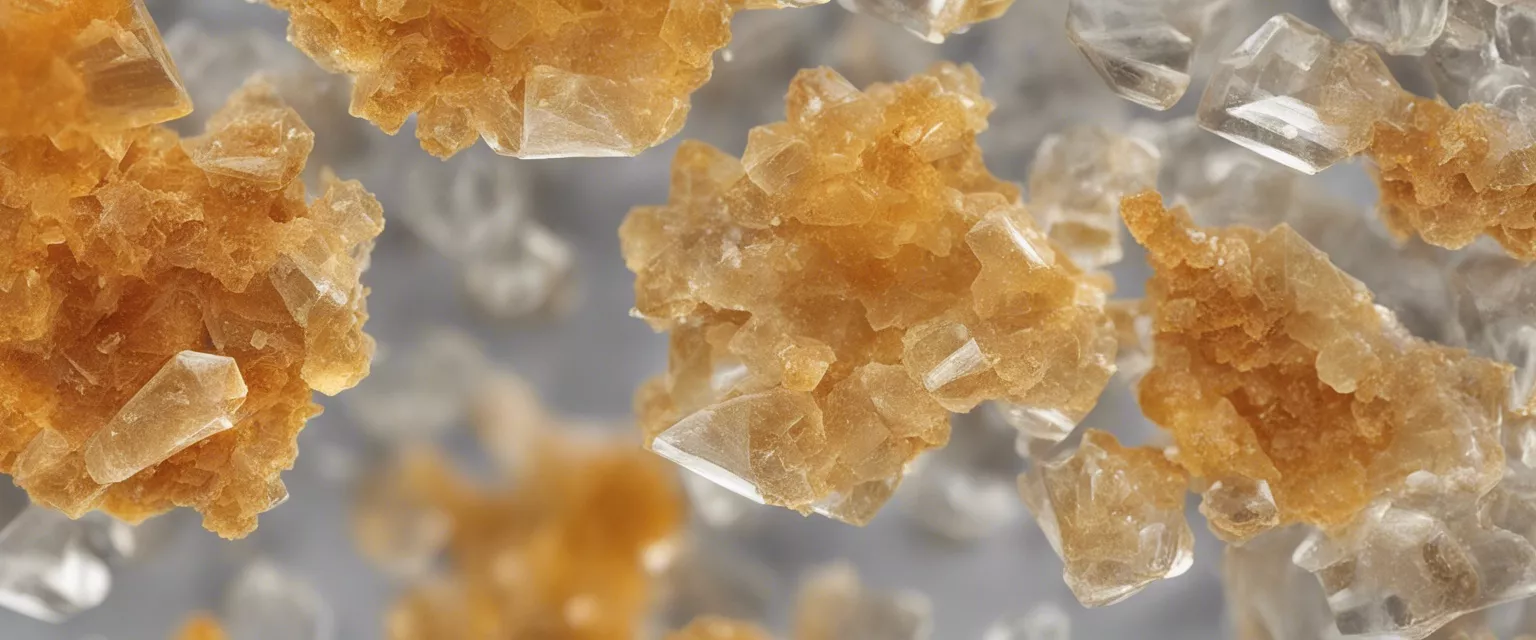
Cannabis diamonds represent the pinnacle of cannabinoid crystallization, consisting of pure THCA crystals that can exceed 99% purity and physically resemble actual diamonds with their faceted, transparent appearance. These crystalline structures form through careful manipulation of supersaturated solutions under specific temperature and pressure conditions, creating some of the most potent cannabis products available in legal markets. The term “diamonds” perfectly captures both their appearance—clear or slightly yellow crystals with sharp geometric faces—and their position as the “crown jewels” of cannabis concentrates, commanding premium prices and attracting connoisseurs seeking ultimate potency.
The formation of cannabis diamonds occurs through a crystallization process similar to how gems form in nature, where dissolved compounds slowly precipitate from solution under controlled conditions to create ordered crystal lattices. In cannabis extraction, processors create supersaturated solutions of cannabinoids in terpenes or residual solvents, then manipulate temperature and pressure to encourage THCA molecules to arrange themselves into perfect crystalline structures. This process can take weeks or months, with larger, more perfect crystals requiring extended growth periods and minimal disturbance, making diamond production both an art and science requiring patience and precision.
Contemporary significance of cannabis diamonds extends beyond mere potency to represent the cannabis industry’s technical sophistication and pursuit of pharmaceutical-grade purity in recreational products. These concentrates demonstrate advanced extraction capabilities while satisfying consumer demand for novel, visually striking products that push the boundaries of what’s possible with cannabis. The combination of extreme potency, visual appeal, and production complexity creates a luxury product category that drives innovation in extraction technology and cultivation practices aimed at maximizing THCA production. Understanding diamond formation, quality assessment, and consumption methods proves essential for industry professionals and consumers navigating this premium segment where single grams can cost hundreds of dollars and effects prove dramatically more intense than traditional cannabis products.
Molecular arrangement in THCA diamonds follows ordered crystalline patterns where carboxylic acid groups enable strong intermolecular hydrogen bonding creating stable lattice structures. The THCA molecule’s geometry allows efficient packing into crystal forms, with the carboxyl group providing polarity that drives organized assembly. X-ray crystallography reveals orthorhombic or monoclinic crystal systems depending on formation conditions. The regular arrangement creates the characteristic faceted appearance as crystals grow along preferential planes. Internal defects remain minimal in slowly grown crystals, contributing to optical clarity. Understanding crystal structure helps processors optimize growth conditions for desired size and quality. The ordered nature contrasts with amorphous concentrates like shatter, explaining differences in stability and appearance.
Optical properties of cannabis diamonds include high refractive index creating brilliant sparkle and light dispersion similar to gemstones, hence their evocative naming. Pure THCA crystals appear water-clear to pale yellow, with color intensity indicating purity levels and potential contaminants. Light passing through faceted surfaces creates rainbow effects through dispersion. Larger crystals exhibit more pronounced optical phenomena due to increased path length. UV fluorescence varies with trace compounds present during crystallization. Microscopic examination reveals growth patterns and internal structure quality. These optical characteristics enable visual quality assessment and contribute to aesthetic appeal. The gemstone-like appearance drives consumer fascination and premium positioning in display cases.
Physical characteristics distinguish diamonds from other cannabis concentrates through extreme hardness, sharp geometric faces, and stability at room temperature without degradation. Individual crystals can reach several grams, though most commercial diamonds range from rice grain to pea sized. Hardness allows handling without deformation, contrasting with malleable concentrates. Melting point around 70°C reflects THCA properties, instantly liquefying when dabbed. Density exceeds other concentrates due to tight molecular packing. Fracture patterns follow crystallographic planes creating sharp edges. Storage stability surpasses other extracts with minimal degradation over months when protected from heat and light. These unique physical properties enable novel consumption methods and long-term collection.
Purity levels in properly formed cannabis diamonds can exceed 99% THCA, representing the highest cannabinoid concentration achievable through physical separation methods. Advanced crystallization techniques remove virtually all contaminants including other cannabinoids, terpenes, lipids, and pigments. Analytical testing confirms exceptional purity using HPLC with results showing single dominant peaks. Trace impurities typically include other cannabinoids like CBGA or CBDA rather than concerning contaminants. The extreme purity means no entourage effect without added terpenes. Achieving pharmaceutical-grade purity requires multiple recrystallization cycles. This concentration creates products where rice grain-sized crystals contain 50-100mg pure THCA. Such purity levels satisfy demands for maximum potency while raising tolerance concerns.
Decarboxylation behavior of THCA diamonds provides unique consumption characteristics as the crystalline acid form requires heat conversion to psychoactive THC. The phase transition from solid crystal to liquid occurs rapidly at dabbing temperatures, with decarboxylation following immediately. Complete conversion efficiency depends on temperature and duration of heat exposure. Lower temperature dabbing may leave residual THCA reducing psychoactive potential. The concentrated nature means small amounts produce intense effects once converted. Some users report different effect profiles from diamonds versus traditional extracts, possibly due to rapid high-dose delivery. Understanding decarboxylation kinetics helps users optimize consumption techniques for desired outcomes.
Terpene relationships with diamonds create interesting dynamics as pure crystals lack aromatic compounds unless specifically reintroduced through “sauce” additions. Natural diamond formation in terpene-rich solutions creates products where crystals swim in aromatic liquid fractions. This separation allows unprecedented control over terpene-to-cannabinoid ratios. Some processors mechanically separate diamonds from sauce, selling components individually. Recombination enables custom ratios satisfying different preferences. The absence of terpenes in pure diamonds eliminates strain-specific characteristics beyond cannabinoid content. Adding cannabis-derived or botanical terpenes creates designer effect profiles. This modularity represents evolution beyond whole-plant philosophy toward precision formulation.
Supersaturation achievement initiates diamond formation by creating solutions containing more dissolved THCA than equilibrium conditions normally allow. Processors typically start with high-THCA extracts like BHO or rosin, dissolved in minimal terpenes or residual hydrocarbons. Concentration through partial evaporation increases saturation levels. Temperature manipulation affects solubility, with cooling promoting crystallization. Some methods involve adding anti-solvents reducing THCA solubility. The degree of supersaturation influences nucleation rates and crystal size, with slight supersaturation favoring large crystal growth. Maintaining metastable conditions requires careful control avoiding spontaneous precipitation. Successful processors develop proprietary techniques achieving optimal supersaturation for their systems. This critical step determines ultimate crystal quality and yield.
Nucleation control separates amateur attempts from professional diamond production by managing where and when crystal growth initiates for optimal size and quality. Spontaneous nucleation creates numerous small crystals while controlled seeding produces fewer, larger diamonds. Seed crystals introduced to supersaturated solutions provide growth templates bypassing random nucleation. Surface imperfections or particles can trigger unwanted nucleation requiring filtered solutions. Temperature fluctuations cause uncontrolled nucleation, demanding stable environments. Some processors use specialized vessels minimizing nucleation sites. Vibration isolation prevents disturbance-induced nucleation during growth periods. Understanding nucleation theory enables manipulation of crystal numbers and sizes. Master extractors closely guard their nucleation techniques as trade secrets.
Growth optimization throughout weeks or months of crystallization requires maintaining ideal conditions for steady crystal enlargement without secondary nucleation or dissolution. Temperature stability within ±1°C prevents growth rate fluctuations affecting crystal quality. Slow cooling programs gradually reduce temperature following supersaturation curves. Concentration maintenance through controlled evaporation or feeding replenishes depleted solutions. Convection patterns affect growth uniformity, with some systems using programmed agitation. pH and ionic strength influence growth rates and crystal morphology. Container geometry impacts convection and crystal settling patterns. Patience distinguishes quality operations from rushed products, as doubling crystal size may require quadrupling growth time. These extended timelines challenge business models but create premium products.
Crystal clarity serves as primary quality indicator with water-clear diamonds commanding highest values while cloudy or included crystals suggest impurities or rapid growth. Internal cloudiness results from trapped mother liquor, micro-bubbles, or co-precipitated impurities during formation. Surface quality reflects growth conditions, with smooth faces indicating steady growth while rough surfaces suggest fluctuating conditions. Optical examination reveals internal structure quality invisible to naked eye. Inclusions of other crystals or amorphous material reduce value. Color variations from water-white through pale yellow to amber correlate with different impurities or oxidation. The gemstone grading parallels extend to cannabis diamonds where clarity significantly impacts pricing. Professional operations maintain conditions producing consistently clear crystals.
Size and morphology of diamonds indicate production expertise with large, well-formed crystals demonstrating superior process control versus small, irregular formations. Commercial diamonds typically range 2-10mm, with exceptional specimens exceeding 20mm representing months of careful growth. Crystal habit varies from elongated prisms to blocky rhombohedrons depending on growth conditions. Twinned crystals showing symmetrical intergrowth patterns command premium interest. Size distribution within batches reveals process consistency. Large single crystals prove more challenging than numerous small ones, requiring extended stable conditions. Some markets prefer “micro diamonds” for easier handling despite lower individual impact. Morphology assessment helps identify optimal growth parameters for reproducible results.
Surface features on quality diamonds exhibit sharp, well-defined faces meeting at precise angles creating the characteristic sparkle distinguishing them from rounded or etched crystals. Growth hillocks and terraces visible under magnification indicate layer-by-layer crystal building. Dissolution features like etch pits suggest unstable conditions during formation. Perfectly smooth faces reflect extremely stable growth environments. Secondary growth creating phantom crystals within crystals adds complexity. Surface contamination from handling or poor storage diminishes quality. Some processors polish or clean crystals enhancing appearance. Natural growth patterns create unique identifiers like fingerprints for individual crystals. These surface details provide insights into formation history and quality.

