
×
Remove product
Remove item from cart?

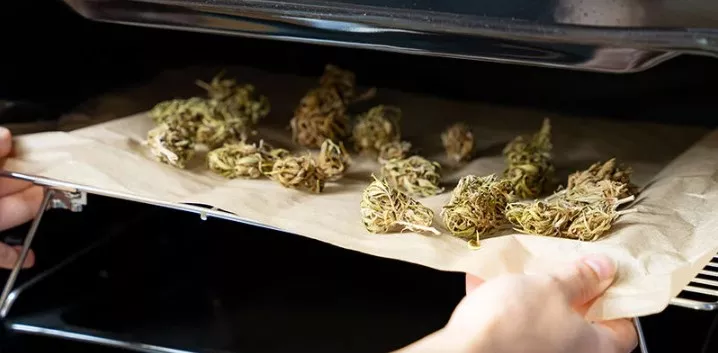
Decarboxylation represents the critical chemical process that transforms non-psychoactive cannabinoid acids in raw cannabis into their active forms through the removal of a carboxyl group (COOH), typically triggered by heat exposure. This fundamental reaction converts tetrahydrocannabinolic acid (THCA) into psychoactive THC, cannabidiolic acid (CBDA) into CBD, and other cannabinoid acids into their neutral counterparts that interact with the endocannabinoid system. Without decarboxylation, consuming raw cannabis produces minimal psychoactive effects despite potentially high THCA content, as cannabinoid acids have limited bioavailability and different pharmacological properties than their decarboxylated forms.
The chemistry of decarboxylation involves breaking carbon-carbon bonds in cannabinoid acids when sufficient thermal energy overcomes activation barriers, releasing carbon dioxide and leaving behind neutral cannabinoids. This process occurs naturally over extended time periods but accelerates dramatically with heat application, whether through smoking, vaporizing, cooking, or dedicated decarboxylation procedures. The reaction follows first-order kinetics with rate constants dependent on temperature, making process control crucial for achieving complete conversion while minimizing degradation of desired compounds into less active byproducts.
Contemporary importance of understanding decarboxylation extends throughout the cannabis industry from cultivation to consumption, affecting product development, quality control, and consumer experiences. Cultivators monitor natural decarboxylation during drying and curing, processors optimize protocols for different product types, and consumers must understand the process for effective edible preparation. Laboratory testing distinguishes between acidic and neutral cannabinoids, providing total potential potency after decarboxylation. This knowledge proves essential for medical patients requiring precise dosing, manufacturers creating consistent products, and regulators establishing potency standards. Understanding decarboxylation mechanisms, optimal conditions, and practical applications enables industry professionals and consumers to maximize cannabis potential while avoiding common pitfalls that waste valuable cannabinoids or create inconsistent experiences.
Molecular transformation during decarboxylation involves the thermal-induced cleavage of carboxyl groups from cannabinoid acids, fundamentally altering their chemical structure and biological activity. The carboxyl group (COOH) attached to cannabinoid acids creates a polar, acidic molecule with limited ability to cross the blood-brain barrier or bind effectively to cannabinoid receptors. When heated, the carbon-carbon bond connecting the carboxyl group weakens until breaking, releasing CO2 and leaving a neutral cannabinoid with enhanced lipophilicity and receptor affinity. This structural change from THCA (C22H30O4) to THC (C21H30O2) represents a loss of 44 atomic mass units per molecule, explaining weight differences between raw and decarboxylated cannabis.
Reaction kinetics of decarboxylation follow predictable patterns enabling process optimization through understanding temperature-time relationships and activation energies. The reaction rate doubles approximately every 10°C increase following Arrhenius equation principles, with THCA requiring activation energy around 85-90 kJ/mol. At room temperature, decarboxylation proceeds negligibly slowly, requiring years for significant conversion. At 110°C (230°F), approximately 50% conversion occurs within 30-40 minutes. Higher temperatures accelerate reactions exponentially but risk degrading cannabinoids to less desirable compounds. The reaction exhibits first-order kinetics, meaning conversion rate depends on remaining acid concentration, creating exponential decay curves approaching but never reaching 100% conversion.
Byproduct formation during decarboxylation extends beyond simple CO2 release to include potential degradation products affecting final product quality and effects. Excessive heat or prolonged exposure degrades THC into cannabinol (CBN) through oxidation, creating sedative effects potentially undesired in energetic strains. Terpene volatilization occurs simultaneously with decarboxylation, potentially stripping aromatic compounds essential for entourage effects. Moisture presence can hydrolyze cannabinoids or promote unwanted reactions. Chlorophyll degradation creates color changes from green to brown. Understanding these parallel processes enables optimization balancing complete decarboxylation with preservation of other valuable compounds. Advanced processors monitor multiple parameters ensuring maximum cannabinoid activation with minimal degradation.
Living plant processes maintain cannabinoids predominantly in acidic forms through enzymatic synthesis, with minimal natural decarboxylation occurring during growth cycles. Cannabis plants produce cannabinoid acids as end products of biosynthetic pathways, with enzymes like THCA synthase specifically creating acidic forms. The plant’s metabolism doesn’t include decarboxylase enzymes targeting these compounds, preserving them in acid form throughout growth. Some minimal conversion may occur in trichome heads exposed to intense sunlight and heat, particularly in equatorial growing regions. However, living plants actively synthesize new cannabinoid acids, maintaining overwhelming acid predominance. This biological preference for acid forms likely serves protective functions, as cannabinoid acids possess antimicrobial and insecticidal properties defending plants.
Post-harvest degradation initiates slow decarboxylation through environmental exposure and enzymatic activity in dying plant tissue. As cellular structures break down during drying, compartmentalized enzymes contact substrates potentially catalyzing various reactions including limited decarboxylation. Temperature fluctuations during drying and curing provide activation energy for slow conversion. UV light exposure accelerates photochemical decarboxylation pathways. Extended curing periods show gradual acid-to-neutral cannabinoid shifts, though complete conversion requires years under typical storage conditions. This natural aging process contributes to vintage cannabis effects, with old samples showing higher CBN from THC degradation alongside partial decarboxylation. Understanding natural decarboxylation helps optimize post-harvest handling preserving desired cannabinoid ratios.
Environmental factors influencing natural decarboxylation rates include temperature variations, humidity levels, light exposure, and atmospheric conditions throughout cultivation and storage. Greenhouse cultivation with high temperatures may show slightly elevated neutral cannabinoid levels compared to cooler outdoor grows. Desert climates with intense UV radiation and heat stress potentially trigger protective decarboxylation. Altitude effects through increased UV exposure at elevation could influence cannabinoid acid stability. Seasonal temperature swings during outdoor flowering affect final cannabinoid profiles. Post-harvest storage conditions dramatically impact decarboxylation rates, with room temperature darkness preserving acid forms while heat and light accelerate conversion. These environmental influences explain cannabinoid profile variations between identical genetics grown in different conditions.
Optimal temperature ranges for decarboxylation balance reaction speed with compound preservation, requiring precise control to achieve complete conversion without degradation. Research indicates 110-130°C (230-266°F) provides ideal conditions for THCA decarboxylation, achieving 95%+ conversion within 30-60 minutes while minimizing THC degradation. Lower temperatures around 95°C (203°F) require 2-3 hours but better preserve terpenes. Higher temperatures approaching 150°C (302°F) complete reactions within minutes but risk significant THC oxidation to CBN and complete terpene loss. CBDA decarboxylates at slightly different rates, requiring consideration in mixed cannabinoid products. Pressure affects optimal temperatures, with vacuum processing enabling lower temperature decarboxylation. Understanding these relationships enables processors to customize protocols for specific product goals.
Time dependencies in decarboxylation create inverse relationships with temperature, offering flexibility in processing approaches based on equipment and product requirements. Mathematical modeling using Arrhenius equations predicts conversion percentages at various temperature-time combinations. For example, achieving 90% THCA conversion requires approximately 10 minutes at 145°C, 30 minutes at 120°C, or 120 minutes at 95°C. However, total processing time must consider heat-up and cool-down periods affecting actual exposure. Thin layers decarboxylate faster than thick materials due to heat transfer limitations. Continuous processes maintain steady-state conditions while batch processing experiences temperature variations. These time factors influence equipment selection and production scheduling in commercial operations balancing throughput with quality.
Catalyst effects can accelerate or modify decarboxylation pathways, though cannabis typically undergoes thermal decarboxylation without added catalysts. Certain minerals naturally present in plant material may exhibit minor catalytic effects on decarboxylation rates. Acidic or basic conditions alter reaction kinetics, with slight acidity potentially accelerating decarboxylation. Metal surfaces in processing equipment could theoretically provide catalytic sites. Some processors experiment with ultrasonic or microwave energy claiming enhanced decarboxylation efficiency. Enzyme-catalyzed decarboxylation remains theoretical for cannabinoids, unlike other biological decarboxylation reactions. Most commercial processes rely on thermal energy alone, finding consistent results without catalyst complexity. Research continues exploring potential catalysts for low-temperature decarboxylation preserving volatile compounds.
Oven decarboxylation represents the most accessible method for consumers and small processors, utilizing common kitchen equipment with reasonable precision and scalability. Standard protocols involve spreading ground cannabis thinly on parchment-lined baking sheets, minimizing material depth for even heating. Temperature selection typically ranges 220-250°F (104-121°C) for 30-45 minutes, with lower temperatures extending duration. Preheating ensures accurate temperature from start, while some protocols include covering material with foil reducing terpene loss. Mid-process stirring improves uniformity but releases volatiles. Altitude adjustments may be necessary as lower atmospheric pressure affects heating dynamics. This method’s simplicity makes it popular for edible preparation, though temperature fluctuations in home ovens can create inconsistent results requiring verification through testing.
Specialized equipment for commercial decarboxylation includes vacuum ovens, rotary evaporators, and purpose-built decarboxylation reactors optimizing process control and efficiency. Vacuum ovens enable lower temperature processing by reducing atmospheric pressure, preserving terpenes while achieving complete decarboxylation. Rotary systems provide continuous agitation ensuring uniform heating while recovering evaporated terpenes for reintroduction. Microwave-assisted decarboxylation claims faster processing through selective molecular heating. Supercritical CO2 systems can achieve in-line decarboxylation during extraction. Industrial conveyor ovens process continuous material flow with precise zone control. These specialized systems justify costs through improved yields, consistency, and terpene preservation critical for commercial success. Investment decisions depend on production scale and target product specifications.
In-situ decarboxylation during extraction or product manufacturing streamlines processing by combining steps, reducing handling and potential compound loss. Many hydrocarbon extraction systems operate at temperatures achieving partial decarboxylation during solvent recovery. Ethanol extraction at elevated temperatures can simultaneously extract and decarboxylate, though this may compromise selectivity. CO2 extraction parameters can be adjusted for decarboxylation during extraction, producing activated oils directly. Edible manufacturing often incorporates decarboxylation into infusion steps, heating cannabis in carrier oils. Vaporizer cartridge filling at elevated temperatures ensures complete activation. These integrated approaches save time and energy while potentially improving yields through reduced handling losses. However, combined processes may sacrifice optimization possible with dedicated steps.

