
×
Remove product
Remove item from cart?

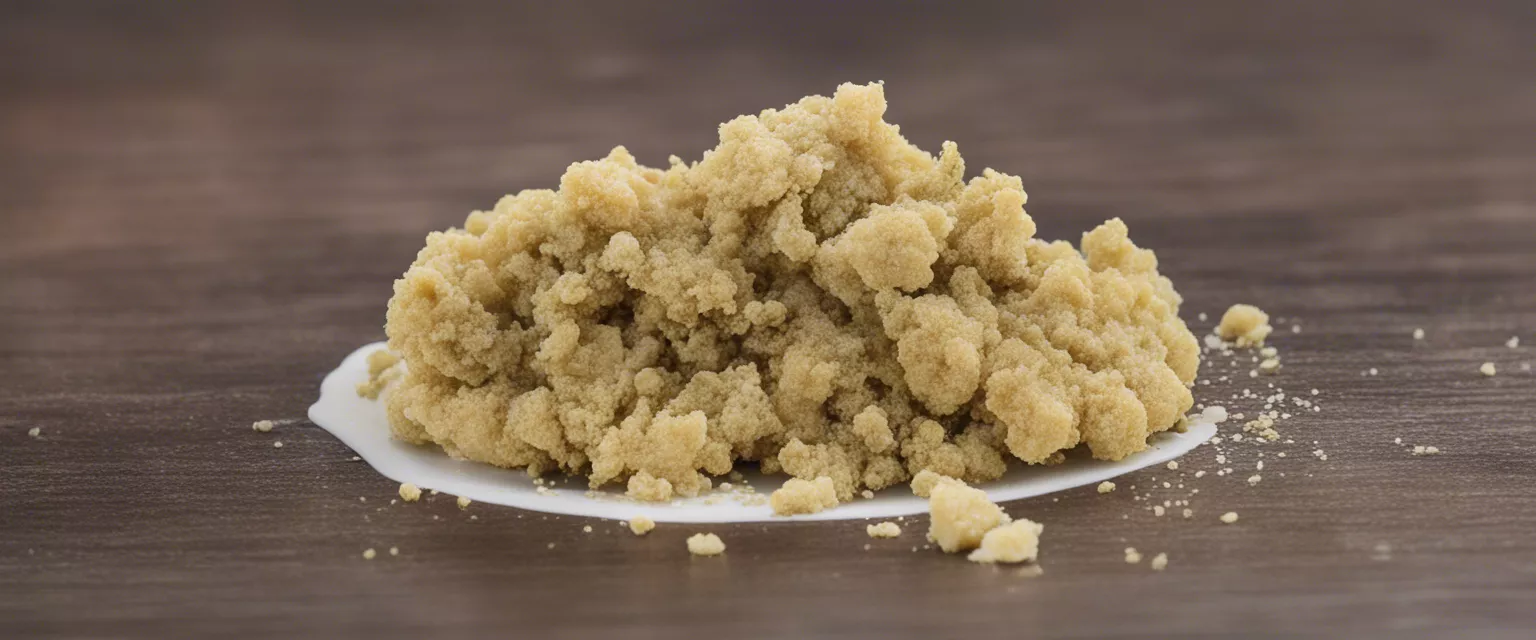
Crumble represents a distinctive cannabis concentrate characterized by its dry, friable texture that easily breaks apart into small pieces resembling honeycomb or cheese crumbles, offering a unique combination of high potency and user-friendly handling properties. This extract type emerged from innovations in post-processing techniques applied to butane hash oil (BHO), where specific temperature and vacuum conditions during purging create the signature crumbly consistency. The final product typically contains 60-90% cannabinoids while maintaining a drier, more stable structure than other concentrate forms like budder or sauce, making it particularly appealing for consumers seeking potent effects without the sticky handling challenges of other extracts.
The production methodology for crumble involves careful manipulation of temperature, pressure, and agitation during the purging process to achieve the characteristic texture while preserving cannabinoid and terpene content. Unlike shatter which aims for molecular stability and clarity, crumble embraces controlled nucleation and lipid incorporation that creates its opaque, matte appearance and unique consistency. This transformation occurs through precise environmental controls that encourage specific crystallization patterns while preventing full wax separation, resulting in a product that maintains structural integrity while being easily portioned for consumption.
Market positioning of crumble occupies a sweet spot between the handling convenience of harder concentrates and the terpene preservation of softer extracts, appealing to both novice and experienced concentrate consumers. The texture allows for easy dosing without specialized tools, as small pieces can be broken off by hand or with simple implements, contrasting with sticky sauces requiring careful handling. This accessibility combined with typical high potency levels has established crumble as a staple product category in dispensaries, particularly favored by consumers who prioritize ease of use and storage stability. Understanding crumble’s production nuances, quality indicators, and optimal consumption methods proves valuable for industry professionals and consumers navigating the diverse concentrate marketplace where texture significantly influences user experience and product selection.
Textural characteristics of quality crumble distinguish it from other concentrate consistencies through its unique dry yet cohesive structure that crumbles under light pressure while maintaining form during storage. The ideal crumble exhibits a honeycomb-like internal structure visible under magnification, created by controlled incorporation of lipids and waxes during processing. This microporous architecture provides the characteristic friability while preventing complete desiccation that would result in dusty, unusable product. Temperature sensitivity remains moderate compared to other concentrates, with crumble maintaining its structure at room temperature while becoming slightly more pliable when warmed. The surface typically appears matte rather than glossy, indicating proper lipid integration rather than separation.
Color variations in crumble range from light blonde to deep amber, primarily determined by starting material quality, extraction parameters, and post-processing oxidation exposure. Lighter colors generally indicate fresher starting material and gentler extraction conditions preserving more volatile compounds. Darker crumbles may result from older material, higher extraction temperatures, or extended air exposure during processing. The opaque appearance results from light scattering through the microporous structure and integrated lipids, contrasting with the transparency of properly made shatter. Color uniformity throughout the batch indicates consistent processing, while mottled appearance might suggest incomplete mixing or variable purging conditions. These visual indicators help assess quality before consumption.
Stability profiles of crumble demonstrate superior shelf life compared to many other concentrate forms due to reduced surface area exposure and lower moisture content. The dry texture resists many degradation pathways affecting stickier concentrates, including terpene evaporation and consistency changes. Properly stored crumble maintains its texture and potency for 6-12 months under appropriate conditions, though some terpene loss occurs over time. The integrated structure prevents separation issues common with sauce products while avoiding the brittleness problems of shatter. Temperature cycling has less dramatic effects on crumble than other consistencies, making it suitable for less controlled storage environments. This stability advantage appeals to both retailers managing inventory and consumers purchasing larger quantities.
Cannabinoid concentration in crumble typically ranges from 60-90% total cannabinoids, with variation dependent on starting material potency and extraction efficiency. The texture-creating process generally results in slightly lower cannabinoid percentages compared to shatter due to retained lipids and waxes contributing to total mass. However, this trade-off provides improved handling and potentially enhanced entourage effects from preserved minor compounds. THC-dominant crumbles remain most common, though CBD-rich and balanced ratio versions serve medical markets. The dry texture can sometimes lead to accelerated decarboxylation during storage, converting THCA to THC faster than in more stable consistencies. Testing protocols must account for potential heterogeneity in crumble samples due to the textured nature.
Terpene retention in crumble faces challenges from the extended purging process required to achieve the characteristic texture, often resulting in moderate terpene levels compared to sauce or live resin products. Initial extraction parameters significantly impact starting terpene content, with lower temperature extractions preserving more volatile compounds. The whipping or agitation process during texture development can accelerate terpene evaporation if not carefully controlled. Some producers reintroduce cannabis-derived terpenes post-processing to enhance flavor profiles. Despite moderate terpene levels, the integrated structure of crumble can protect remaining terpenes better than exposed surfaces of other consistencies. Typical terpene content ranges from 2-8%, sufficient for strain-specific effects while maintaining the desired dry texture.
Lipid and wax content in crumble plays a crucial structural role, differentiating it from dewaxed concentrates like shatter while contributing to the unique consistency. These compounds, typically removed through winterization in other extract types, remain integrated in crumble at levels of 5-15%. The presence of plant waxes creates nucleation sites encouraging the crystalline structure development during purging. While some purists consider wax content undesirable, it contributes to crumble’s forgiving handling properties and may provide beneficial compounds. The lipid matrix potentially protects cannabinoids from oxidation while creating the microporous structure defining quality crumble. Understanding this compositional difference helps explain crumble’s unique properties and storage characteristics.
Initial extraction parameters for crumble production typically utilize butane or butane-propane blends at temperatures ranging from -20°C to -40°C to extract cannabinoids and terpenes while limiting undesirable compounds. The solvent-to-biomass ratios generally run higher than shatter production, allowing more complete extraction including some waxes and lipids essential for final texture. Column packing density affects extraction efficiency and compound selectivity, with moderate packing preventing channeling while allowing thorough solvent penetration. Extraction times vary from 15-45 minutes depending on system design and desired extract characteristics. Some producers employ multiple washes or solvent blends to fractionate extraction, collecting separate runs for different product types. The initial extract solution requires careful handling to prevent premature precipitation affecting final texture quality.
Temperature and pressure relationships during extraction critically influence the compound profile that determines final crumble characteristics after purging. Lower temperatures favor terpene preservation but may reduce overall yield, while moderate temperatures balance efficiency with quality. Pressure maintenance throughout extraction ensures consistent solvent density and solvency power. Closed-loop systems enable precise pressure control while recovering solvents for reuse. The relationship between temperature and pressure affects which plant compounds enter solution, with specific conditions favoring cannabinoid extraction while limiting chlorophyll. Some advanced systems employ pressure ramping or temperature programming to optimize extraction selectivity. Understanding these parameters enables processors to target specific consistency outcomes from the extraction phase.
Post-extraction handling procedures set the stage for successful crumble production, requiring careful management of the solution before purging begins. Collection vessel temperatures influence initial precipitation and crystal formation that affects final texture. Some processors initiate controlled nucleation through temperature manipulation or seeding with previously made crumble. The solution concentration through partial solvent recovery impacts viscosity and subsequent processing behavior. Filtration decisions determine wax content, with minimal filtration preserving compounds needed for crumble texture. Homogenization ensures uniform distribution of dissolved compounds preventing inconsistent final products. These critical steps between extraction and purging often determine success or failure in achieving desired crumble characteristics.
Optimal crumble texture exhibits uniform friability throughout the batch, breaking cleanly into smaller pieces without excessive dust formation or sticky spots indicating processing inconsistencies. The ideal consistency balances structural integrity for packaging and handling with easy portioning for consumption. When compressed between fingers, quality crumble should break rather than smear, distinguishing it from budder or wax consistencies. The internal structure should appear homogeneous when broken open, without visible separation layers or wet spots. Excessive dryness creating dusty, powdery product indicates over-purging or improper storage, while sticky sections suggest incomplete purging or temperature abuse. Professional producers maintain texture specifications through standardized testing protocols.
Visual quality indicators for premium crumble include consistent coloration, matte surface finish, and absence of visible contaminants or separation. The color should remain uniform throughout without dark spots indicating oxidation or light areas suggesting separation. Surface texture appears slightly rough or granular rather than smooth, reflecting the microporous structure. High-quality crumble maintains its appearance during normal handling without oil separation or color changes. Packaging visibility allows consumer assessment before purchase, making visual standards particularly important. Some markets develop grading systems based on color and consistency combinations. These visual standards guide both production quality control and consumer purchasing decisions in competitive retail environments.
Aromatic profiles in quality crumble should reflect the source material’s terpene signature despite some loss during processing, with clean cannabis aromas free from residual solvent odors. Initial smell upon opening containers provides immediate quality assessment, with premium products exhibiting strain-specific terpene expressions. Off-odors suggesting residual butane, propane, or other contaminants indicate inadequate purging requiring further testing. The dry texture of crumble can concentrate remaining terpenes, creating intense aromatic experiences when containers are opened. Some producers enhance natural aromas through careful processing preserving native terpenes rather than adding botanical sources. Storage duration affects aromatic intensity, with fresh crumble providing more pronounced terpene expression than aged products.

