
×
Remove product
Remove item from cart?

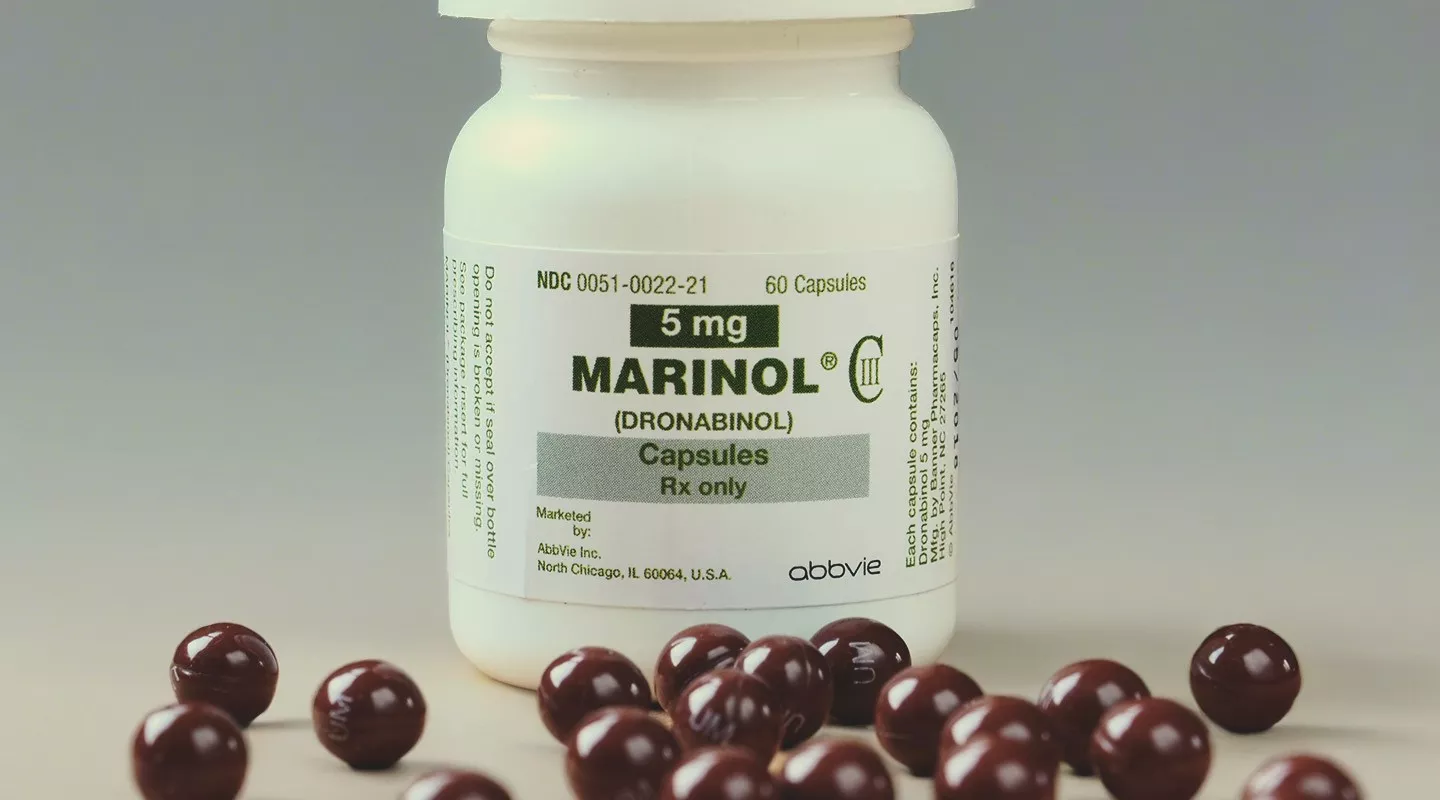
Marinol represents the first FDA-approved synthetic cannabinoid medication, containing dronabinol – a laboratory-created version of delta-9-tetrahydrocannabinol (THC) dissolved in sesame oil and encapsulated for oral administration. Approved in 1985 for chemotherapy-induced nausea and vomiting, and later for AIDS-related anorexia and wasting syndrome, Marinol emerged during peak drug war hysteria as a pharmaceutical industry attempt to harness cannabis‘s medical benefits while maintaining prohibition of the natural plant. This pharmaceutical paradox – acknowledging THC’s medical value while classifying whole-plant cannabis as Schedule I with “no accepted medical use” – exposes fundamental contradictions in drug policy that persist today.
The development and marketing of Marinol illustrates complex intersections between pharmaceutical capitalism, drug policy, and patient access, as synthetic THC commanded premium prices while patients faced imprisonment for using more effective and affordable natural cannabis. Marinol’s limitations – delayed onset, unpredictable absorption, lack of entourage effects, and frequently overwhelming psychoactivity – highlighted the superiority of whole-plant medicine for many patients, inadvertently strengthening arguments for medical cannabis legalization. The drug’s commercial failure relative to initial projections demonstrated that isolating single cannabinoids fails to capture cannabis’s therapeutic complexity, validating patient wisdom about botanical medicine’s advantages.
Contemporary relevance of Marinol extends beyond its limited clinical use to represent broader themes in cannabis medicalization, including tensions between pharmaceutical standardization and botanical medicine, questions about synthetic versus natural therapeutics, and ongoing struggles over who controls cannabis-based medicine. Understanding Marinol’s history, pharmacology, and market position provides crucial context for current debates about FDA-approved cannabis medicines versus state-legal medical marijuana programs. As pharmaceutical companies develop new cannabinoid medications while cannabis legalization expands, Marinol’s story offers important lessons about patient preferences, therapeutic complexity, and the limitations of reductionist approaches to plant medicine.
Historical context of Marinol’s development reveals coordinated efforts between government agencies and pharmaceutical companies to create cannabis-based medicines that wouldn’t threaten prohibition, reflecting political compromises prioritizing drug war ideology over optimal patient care. Unimed Pharmaceuticals (later acquired by Solvay, then AbbVie) developed dronabinol through the 1970s with government support, as federal agencies recognized growing evidence of cannabis’s medical benefits while maintaining commitment to prohibition. The National Cancer Institute’s involvement stemmed from desperate need for effective antiemetics as chemotherapy advanced, with existing medications proving inadequate for severe nausea. DEA cooperation in scheduling Marinol as Schedule III (later Schedule II) while maintaining cannabis as Schedule I created legal framework acknowledging synthetic THC’s medical value while denying same recognition to identical molecules in natural form.
Synthesis and formulation of pharmaceutical THC required solving significant technical challenges, as pure THC proves highly unstable and poorly absorbed orally, necessitating specialized manufacturing and delivery systems. Laboratory synthesis typically employs complex organic chemistry starting from olivetol and geraniol derivatives, requiring multiple steps and purification processes that dramatically increase costs compared to plant extraction. The sesame oil vehicle attempts to improve bioavailability through lipid solubility, though absorption remains highly variable between individuals and dosing occasions. Soft gelatin capsule technology provides stability and standardized dosing but limits flexibility for dose titration. Manufacturing must occur under strict pharmaceutical standards including DEA security requirements for Schedule III substances, adding complexity and cost compared to botanical preparations.
Clinical trial design for Marinol faced unique challenges comparing synthetic THC to placebo while real-world patients often had cannabis experience, creating difficulties in blinding and outcome measurement that would plague cannabinoid pharmaceutical development. Early trials focused on antiemetic effects in cancer patients, demonstrating superiority to placebo but mixed results compared to existing medications like prochlorperazine. AIDS wasting trials showed appetite stimulation and weight gain, though questions remained about quality of life improvements. Adverse events including dysphoria, anxiety, and cognitive impairment occurred more frequently than reported with natural cannabis, possibly due to lack of modulating compounds. The narrow therapeutic window between efficacy and intoxication complicated dosing recommendations. These trials established efficacy for limited indications while revealing limitations that would constrain clinical adoption.
Approved indications for Marinol remain limited to chemotherapy-induced nausea/vomiting in patients failing conventional antiemetics and anorexia with weight loss in AIDS patients, though off-label use extends to various conditions where THC shows benefit. The antiemetic indication requires documented failure of standard medications, positioning Marinol as last resort rather than first-line therapy despite potentially superior efficacy. AIDS-related cachexia indication emerged during epidemic’s peak when wasting syndrome caused significant mortality, though improved antiretroviral therapy reduced this population. Off-label uses include chronic pain, multiple sclerosis spasticity, and general appetite stimulation, though evidence remains limited compared to whole-plant cannabis studies. Insurance coverage varies significantly, with some plans restricting to labeled indications while others permit broader use. These narrow approvals contrast with medical cannabis programs recognizing dozens of qualifying conditions.
Dosing challenges with Marinol stem from highly variable oral bioavailability (4-20%), delayed onset (30-120 minutes), and extended duration (4-8 hours) that complicate titration and increase adverse event risks compared to inhaled cannabis. Standard dosing starts at 2.5mg twice daily, though many patients require 5-10mg per dose for efficacy, approaching doses causing significant psychoactivity in cannabis-naive individuals. The delayed onset leads some patients to redose prematurely, resulting in overwhelming effects hours later. Food dramatically affects absorption, with high-fat meals potentially tripling bioavailability and creating unpredictable responses. Elderly patients show increased sensitivity requiring dose reductions. The inability to rapidly terminate effects if adverse reactions occur creates safety concerns absent with inhaled routes. These pharmacokinetic limitations fundamentally constrain Marinol’s clinical utility.
Adverse effect profiles of Marinol consistently show higher rates of psychiatric and cognitive side effects compared to patient reports with whole-plant cannabis, suggesting isolated THC produces qualitatively different experiences than botanical preparations. Common adverse events include drowsiness, dizziness, confusion, anxiety, and mood changes, with some patients experiencing severe dysphoria or paranoia requiring treatment discontinuation. The absence of CBD and other modulating compounds likely explains increased psychiatric effects, as botanical preparations contain anxiolytic and antipsychotic components. Cognitive impairment appears more pronounced and longer-lasting than with inhaled cannabis, possibly due to sustained high blood levels. Cardiovascular effects including tachycardia and orthostatic hypotension occur frequently. These adverse event profiles limit patient acceptance and physician comfort with prescribing.
Entourage effect absence in Marinol demonstrates pharmaceutical reductionism’s limitations, as isolated THC lacks the hundreds of compounds in cannabis that modulate effects, enhance therapeutic benefits, and reduce adverse events through synergistic interactions. Whole-plant cannabis contains cannabinoids like CBD that counteract THC’s anxiety-producing effects, terpenes that influence mood and cognition, and flavonoids with anti-inflammatory properties – all absent in Marinol. Patient reports consistently describe Marinol’s effects as “flat” or “one-dimensional” compared to cannabis’s complex experiences. The entourage concept challenges pharmaceutical paradigms requiring single-molecule standardization, suggesting botanical medicines’ complexity provides therapeutic advantages. Research increasingly validates synergistic interactions between cannabis compounds, explaining patient preferences for whole-plant preparations despite pharmaceutical industry assumptions about isolated actives’ superiority.
Cost comparisons between Marinol and cannabis reveal dramatic disparities that affect patient access and healthcare economics, with synthetic THC commanding premium pharmaceutical prices while often proving less effective than affordable botanical alternatives. Marinol costs typically exceed $1000 monthly for effective doses, though insurance coverage reduces patient expenses when available. Generic dronabinol lowered costs somewhat but remains expensive compared to cannabis. Medical cannabis costs vary by market but generally provide superior value, with monthly supplies often under $200-400. Home cultivation where permitted reduces costs further while empowering patient control. The price differential seems particularly egregious given Marinol’s manufacturing from synthetic precursors rather than complex extraction processes. These economic disparities raise ethical questions about pharmaceutical pricing for molecules patients can grow themselves.
Patient preference studies consistently demonstrate overwhelming choice of natural cannabis over Marinol when both options are available, citing superior efficacy, fewer side effects, dosing flexibility, and holistic benefits beyond isolated symptom management. Surveys of patients with experience using both preparations show 80-95% preferences for cannabis, with common reasons including faster onset, ability to titrate doses, broader symptom relief, and fewer psychiatric side effects. Patients value cannabis’s versatility in addressing multiple symptoms simultaneously – pain, nausea, anxiety, insomnia – while Marinol targets single indications. The ritualistic and social aspects of cannabis use provide psychological benefits absent with pharmaceutical capsules. Even patients initially preferring pharmaceutical respectability often switch to cannabis after experiencing both options. These preferences challenge assumptions about patient desires for FDA-approved medications.
Schedule contradictions between Marinol (Schedule III) and cannabis (Schedule I) expose drug scheduling’s political rather than scientific basis, as identical THC molecules receive different legal treatment based solely on source and corporate involvement. The DEA’s rationale that Marinol’s pharmaceutical formulation provides better control and lower abuse potential than botanical cannabis lacks empirical support, as Marinol’s oral route actually enables easier diversion than inhaled cannabis requiring paraphernalia. The scheduling disparity criminalized patients using natural THC while protecting pharmaceutical company profits from synthetic versions. This contradiction became increasingly untenable as states legalized medical cannabis, creating parallel systems where federal law recognized synthetic THC’s medical value while denying naturally-sourced THC’s identical properties. Recent DEA considerations of rescheduling cannabis acknowledge these logical inconsistencies Marinol’s classification exposed.
FDA precedent established by Marinol’s approval created pathways for subsequent cannabinoid pharmaceuticals while raising questions about regulatory capture and double standards in drug approval processes favoring corporate products over botanical medicines. Marinol’s approval demonstrated FDA willingness to approve cannabinoid medicines despite federal cannabis prohibition, encouraging pharmaceutical investment in cannabinoid drug development. However, the expedited approval process and limited efficacy data required for Marinol contrasts with obstacles facing botanical cannabis research. Subsequent approvals of Cesamet (nabilone), Syndros (liquid dronabinol), and Epidiolex (CBD) built on Marinol’s precedent while maintaining pharmaceutical industry advantages. The FDA’s refusal to consider botanical cannabis preparations as medicines despite superior patient outcomes reveals institutional biases favoring single-molecule pharmaceuticals over complex botanical preparations.
Policy implications of Marinol’s existence complicated medical cannabis advocacy by allowing prohibitionists to claim patients had legal pharmaceutical alternatives, obscuring distinctions between isolated and whole-plant therapeutics in policy debates. Government officials cited Marinol’s availability when opposing medical cannabis laws, arguing FDA-approved options eliminated need for state programs. This rhetorical strategy ignored patient testimonies about Marinol’s inadequacy and higher costs. Marinol’s commercial struggles undermined arguments about pharmaceutical alternatives’ sufficiency as few physicians prescribed it and many patients discontinued due to side effects. The existence of legal synthetic THC while criminalizing natural THC highlighted prohibition’s irrationality to increasingly skeptical public. Ultimately, Marinol’s limitations strengthened rather than weakened medical cannabis movements by demonstrating whole-plant medicine’s superiority.

