
×
Remove product
Remove item from cart?

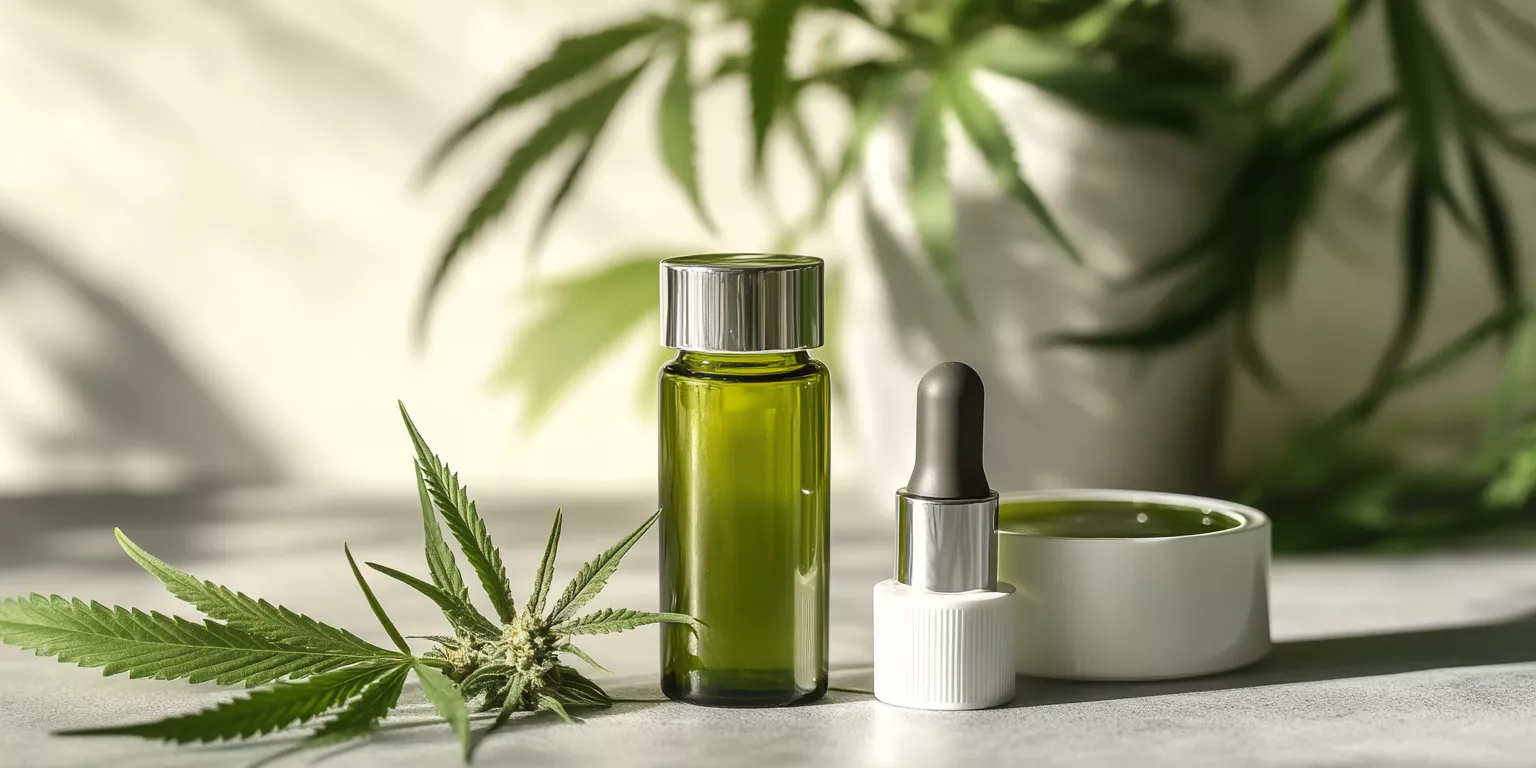
Cannabis isolates represent the purest form of individual cannabinoids, typically achieving 95-99.9% purity through sophisticated extraction and purification processes that remove all other plant compounds. These crystalline or powder substances contain a single cannabinoid in its most concentrated form, free from terpenes, flavonoids, lipids, and other cannabinoids that characterize whole-plant extracts. The development of isolation techniques has revolutionized both cannabis research and product formulation, enabling precise dosing, consistent effects, and the ability to study individual cannabinoid properties without confounding variables from other compounds.
The commercial importance of isolates extends far beyond simple purity, encompassing regulatory compliance, formulation flexibility, and therapeutic precision. CBD isolate dominates the market due to its non-psychoactive properties and broad legal acceptance, but isolation techniques now yield pure forms of minor cannabinoids like CBG, CBN, and CBC, opening new therapeutic possibilities. These pure compounds serve as building blocks for sophisticated formulations where specific ratios can be achieved consistently, addressing the variability inherent in whole-plant products. For manufacturers, isolates provide standardized ingredients that simplify quality control and regulatory compliance.
The evolution from crude extracts to pharmaceutical-grade isolates mirrors the cannabis industry’s transformation from artisanal to scientific manufacturing. Modern isolation facilities employ equipment and techniques borrowed from pharmaceutical and fine chemical industries, operating under strict quality standards. This progression enables cannabis products to meet the consistency and purity expectations of mainstream consumers and medical professionals, while also facilitating research into the specific properties and potential applications of individual cannabinoids previously masked by the complexity of whole-plant preparations.
Crystallization serves as the primary method for producing high-purity cannabinoid isolates, exploiting differences in solubility and crystal formation properties. The process typically begins with a concentrated extract containing 70-90% of the target cannabinoid, which undergoes dissolution in appropriate solvents followed by controlled precipitation. For CBD isolate, pentane or heptane systems at specific temperature gradients encourage crystal growth while impurities remain in solution. The process requires precise control of supersaturation levels, temperature ramping rates, and agitation to produce uniform crystals with minimal occlusion of impurities.
Seeding strategies significantly impact crystal quality and yield in cannabinoid isolation. Introduction of pure seed crystals at optimal supersaturation provides nucleation sites that promote controlled growth rather than spontaneous precipitation. Seed crystal size, addition rate, and timing all influence final product characteristics. Some processors use sonocrystallization, applying ultrasonic energy to induce nucleation and reduce metastable zone width. Anti-solvent crystallization, where a poor solvent is added to reduce cannabinoid solubility, offers another approach particularly useful for heat-sensitive compounds.
Recrystallization steps refine initial isolates to pharmaceutical-grade purity exceeding 99%. Multiple crystallization cycles using different solvent systems remove specific impurity classes—first removing other cannabinoids, then terpenes and lipids, finally trace pigments and degradation products. Each cycle involves careful mother liquor analysis to optimize recovery and purity. Advanced techniques like zone refining or continuous crystallization systems push the boundaries of achievable purity. The final drying process under vacuum removes residual solvents while preventing degradation or polymorphic changes.
Preparative chromatography offers unparalleled selectivity for isolating specific cannabinoids, particularly valuable for minor compounds difficult to crystallize. High-performance liquid chromatography (HPLC) systems scaled for production can process kilograms of extract daily while achieving baseline separation between closely related cannabinoids. Reverse-phase chromatography using C18 stationary phases and gradient elution with ethanol-water or acetonitrile-water mobile phases provides robust, reproducible separations. The ability to preserve acid forms of cannabinoids makes chromatography essential for isolating THCA, CBDA, and other carboxylated compounds.
Continuous chromatography technologies like simulated moving bed (SMB) revolutionize the economics of cannabinoid isolation. By coordinating multiple columns with sophisticated valve switching, SMB systems create countercurrent effects that maximize separation efficiency while minimizing solvent consumption. These systems excel at binary separations such as CBD/THC splitting or removing specific impurities. While capital costs are substantial, operational savings and consistent product quality justify investment for large-scale isolation. Real-time monitoring using in-line UV or mass spectrometry detection enables automated fraction collection.
Supercritical fluid chromatography (SFC) combines the selectivity of liquid chromatography with the efficiency of gas chromatography for cannabinoid isolation. Using CO2 as the primary mobile phase with small amounts of modifier solvents, SFC provides faster separations with reduced solvent waste. The low viscosity and high diffusivity of supercritical CO2 enable higher flow rates and improved mass transfer. Temperature and pressure manipulation provides additional selectivity variables. SFC particularly excels at chiral separations and isolating thermally labile compounds, expanding the range of accessible cannabinoid isolates.
Analytical characterization of cannabinoid isolates requires multiple orthogonal techniques to verify identity, purity, and absence of contaminants. Primary identification uses spectroscopic methods including nuclear magnetic resonance (NMR), mass spectrometry, and infrared spectroscopy to confirm molecular structure. Purity assessment typically employs HPLC with photodiode array detection, comparing peak areas at multiple wavelengths. Gas chromatography provides complementary analysis for volatile impurities. The complexity of cannabinoid chemistry necessitates method validation specific to each isolate type.
Impurity profiling goes beyond simple purity percentage to identify and quantify specific contaminants that might impact safety or efficacy. Related cannabinoids represent the most common impurities, requiring chromatographic methods capable of resolving structural isomers and homologs. Residual solvents from extraction and crystallization must meet pharmaceutical guidelines, typically requiring headspace GC analysis. Heavy metals, pesticides, and microbial contaminants require monitoring despite the purification process. Some sophisticated operations employ mass spectrometry-based metabolomics to ensure absence of unexpected compounds.
Physical characterization of isolates includes particle size distribution, polymorphism, and thermal properties that impact formulation behavior. X-ray powder diffraction identifies crystalline forms and detects amorphous content. Differential scanning calorimetry reveals melting points, phase transitions, and purity through melting point depression. Particle morphology via scanning electron microscopy influences flow properties and dissolution rates. These physical parameters prove crucial for consistent manufacturing and predictable product performance. Documentation of all characteristics creates comprehensive specifications ensuring batch-to-batch consistency.
Pharmaceutical development represents a primary application for cannabinoid isolates, where precise dosing and absence of confounding variables enable rigorous clinical research. Single-compound formulations allow clear establishment of dose-response relationships, pharmacokinetic profiles, and safety margins required for drug approval. Isolates facilitate combination with advanced drug delivery systems designed for specific compounds rather than complex extracts. The ability to create exact ratios of multiple isolates enables systematic investigation of synergistic effects. This pharmaceutical approach has yielded FDA-approved medications and continues driving cannabinoid drug development.
Consumer product applications leverage isolates for consistency, regulatory compliance, and formulation flexibility. THC-free products using CBD isolate access markets where any THC presence faces legal restrictions. Flavorless, odorless isolates integrate seamlessly into foods, beverages, and cosmetics without cannabis taste or color. Water-soluble formulations become simpler with pure compounds lacking the complex lipid matrices of whole-plant extracts. Brand standardization across batches and production facilities improves with isolate-based formulations. These advantages often outweigh the higher cost compared to crude extracts.
Research applications critically depend on isolates to elucidate individual cannabinoid mechanisms without entourage effect complications. Structure-activity relationship studies require pure compounds to correlate specific molecular features with biological effects. Receptor binding assays, enzyme inhibition studies, and cellular response experiments all benefit from single-compound clarity. Isotopically labeled isolates enable sophisticated pharmacokinetic and metabolic studies. The availability of diverse cannabinoid isolates has accelerated scientific understanding of the endocannabinoid system and therapeutic potential of cannabis-derived compounds.
The absence of entourage effects in isolates represents both a limitation and consideration for therapeutic applications. While isolates provide consistency and targeted effects, they may lack the synergistic benefits observed with full-spectrum products. Some conditions respond better to the complex interplay of multiple cannabis compounds rather than isolated cannabinoids. The reductionist approach of isolates, while scientifically valuable, might not capture the full therapeutic potential of cannabis. This limitation has driven development of formulated products combining multiple isolates to recreate beneficial interactions.
Stability considerations for isolates differ from whole-plant extracts, often showing increased susceptibility to degradation without the protective matrix of other compounds. Crystalline isolates can undergo polymorphic transitions affecting solubility and bioavailability. Exposure to heat, light, or moisture may trigger degradation or transformation reactions. Proper packaging under inert atmosphere and controlled storage conditions becomes critical. Some isolates prone to oxidation or isomerization require antioxidant systems or specialized formulations to maintain stability.
Economic factors influence isolate utilization, as production costs significantly exceed those of basic extracts. The sophisticated equipment, technical expertise, and yield losses through purification create premium pricing. Small-scale producers may find isolate production economically unfeasible. Market price fluctuations for specific isolates can impact product economics dramatically. However, the ability to use lower doses due to higher purity and bioavailability may offset raw material costs. Value positioning focusing on purity, consistency, and targeted effects justifies premium pricing for many applications.

