
×
Remove product
Remove item from cart?
Sold & Shipped by: BIRCH+FOG
-
×

$18.00$14.40

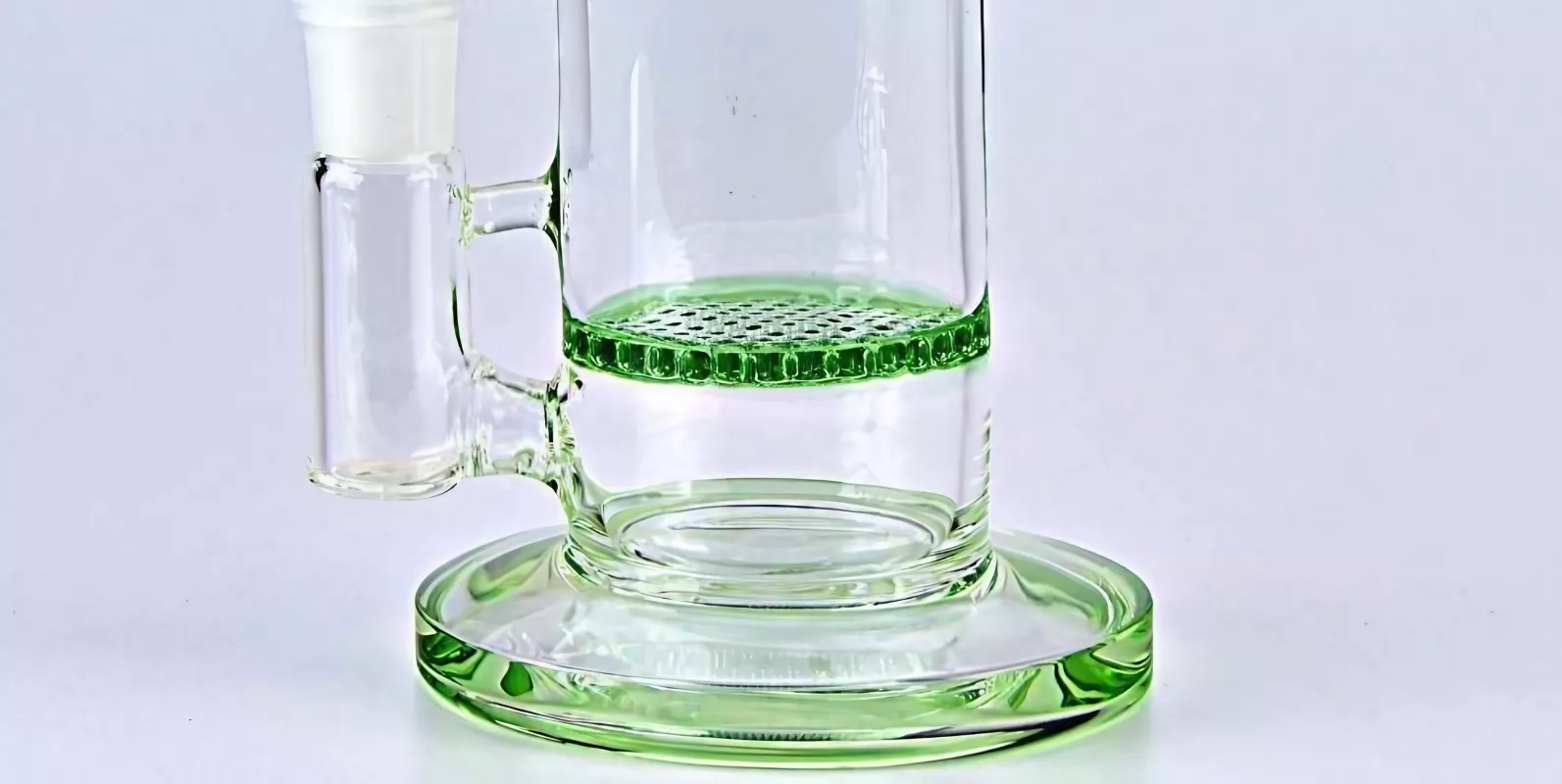
Honeycomb disc percolators represent a sophisticated advancement in water pipe technology, featuring a flat disc riddled with numerous small holes arranged in a hexagonal pattern that creates optimal smoke diffusion and filtration. This design innovation transforms the smoking experience by forcing smoke through dozens or even hundreds of tiny apertures, breaking it into minute bubbles that maximize water contact for superior cooling and filtration. The honeycomb structure, inspired by nature’s efficient hexagonal geometry, provides exceptional structural strength while maintaining minimal drag, allowing smooth airflow despite the extensive percolation. These percolators have become increasingly popular in premium glass pieces, offering a perfect balance between filtration efficiency and ease of use that appeals to both casual consumers and connoisseurs.
The engineering principles behind honeycomb disc percolators demonstrate the cannabis industry’s evolution toward scientifically optimized consumption devices that enhance user experience while potentially reducing harmful byproducts. Unlike traditional downstems or tree percolators, honeycomb discs create uniform bubble distribution across the entire disc surface, ensuring consistent filtration without channeling or dead zones. The horizontal orientation naturally stacks bubbles as they rise through the water column, creating additional surface area contact that further cools smoke and filters particulates. Multiple honeycomb discs can be stacked within a single piece, exponentially increasing filtration without proportionally increasing draw resistance, a feat impossible with many other percolator designs.
Market positioning of honeycomb disc equipped pieces reflects their status as premium functional art, with prices ranging from affordable import options to multi-thousand dollar custom creations by renowned glass artists. The versatility of honeycomb percolators allows integration into various piece styles, from simple straight tubes to complex multi-chamber designs, making them accessible across different price points and user preferences. Quality variations between manufacturers significantly impact performance, with factors like hole size, disc thickness, and placement precision affecting both function and durability. This technology represents the convergence of traditional smoking culture with modern engineering, creating products that honor cannabis traditions while embracing innovation for enhanced consumption experiences.
Geometric optimization of honeycomb patterns in cannabis percolators leverages hexagonal efficiency principles discovered in natural structures, providing maximum hole density within minimal material usage. The hexagonal arrangement allows adjacent holes to share walls, creating stronger structures than circular hole patterns while maximizing open area for smoke passage. Typical honeycomb discs feature between 30 to over 200 holes depending on disc diameter and intended function, with each hole precisely sized between 1-3mm to create optimal bubble formation. The mathematical relationship between hole size, spacing, and disc thickness determines percolation characteristics, with smaller holes creating finer bubbles but requiring greater lung power. Computer modeling now assists designers in optimizing these parameters for specific performance goals, whether prioritizing smoothness, flavor preservation, or visual bubble stack effects.
Fluid dynamics within honeycomb percolators create complex flow patterns that enhance filtration efficiency beyond simple bubble production. As smoke enters the chamber below the disc, pressure differential forces it through the honeycomb holes, creating turbulent micro-vortices that increase water contact time. The sudden expansion as smoke exits each hole causes rapid cooling while the bubble formation process mechanically filters larger particulates. Bubble coalescence above the disc creates secondary filtration as smaller bubbles merge and rise, with the honeycomb pattern promoting vertical stacking that maintains distinct bubble columns. This laminar flow pattern reduces splash-back compared to chaotic percolation methods while creating visually appealing bubble formations that indicate proper function.
Structural integration of honeycomb discs within water pipes requires precise engineering to maintain functionality while ensuring durability. Fixed disc designs weld the honeycomb directly to the pipe walls, creating permanent installations that eliminate weak points but complicate cleaning. Removable disc systems use ground glass joints or compression fittings, allowing maintenance access but potentially introducing air leaks if improperly sealed. Disc positioning relative to water level critically affects performance, with optimal placement creating 0.5-1 inch of water coverage that balances filtration with minimal drag. Support structures must accommodate thermal expansion without cracking while maintaining perfect horizontal orientation preventing channeling. These engineering challenges explain price premiums for well-designed honeycomb pieces over simpler percolator styles.
Bubble formation mechanics in honeycomb percolators follow predictable physics principles that determine filtration efficiency and smoking characteristics. Surface tension at each hole creates a threshold pressure required for bubble formation, with smaller holes requiring greater pressure but producing finer bubbles with increased surface area to volume ratios. The Weber number, relating inertial forces to surface tension, predicts bubble size and formation frequency, with optimal ranges creating uniform bubbles that efficiently strip smoke of water-soluble compounds and particulates. Bubble rise velocity depends on size and water temperature, with honeycomb-generated bubbles typically ascending slower than large single bubbles, increasing residence time for improved filtration. These physics principles guide hole size selection for different user preferences and consumption styles.
Filtration efficiency of honeycomb percolators exceeds many traditional designs due to maximized water-smoke interface area and controlled flow patterns. Studies indicate properly designed honeycomb percolators can remove 40-60% of water-soluble toxins while preserving most cannabinoids and terpenes that contribute to effects and flavor. The uniform bubble size distribution prevents channeling that reduces efficiency in other designs, ensuring all smoke receives consistent treatment. Multiple pass filtration occurs as bubbles rise through the water column, with each interaction opportunity removing additional particulates and cooling smoke further. Temperature reduction through honeycomb percolation typically reaches 20-40°C depending on water temperature and path length, significantly improving inhalation comfort while potentially reducing thermal degradation of beneficial compounds.
Pressure dynamics within honeycomb systems create unique characteristics affecting both function and user experience. Initial draw resistance peaks as pressure builds to overcome surface tension across all holes simultaneously, followed by smooth flow once percolation establishes. This threshold effect creates natural flow rate limitation preventing overly aggressive pulls that might otherwise cause splash-back or incomplete filtration. Pressure drop across the disc remains relatively constant once flowing, unlike tree or shower head percolators where resistance increases with flow rate. Back-pressure waves during clearing create interesting visual effects as bubble formation momentarily reverses, demonstrating the dynamic pressure equilibrium within the system. Understanding these pressure relationships helps users optimize their technique for maximum benefit.
Glass forming techniques for honeycomb disc production require specialized equipment and expertise explaining quality variations between manufacturers. Laser cutting technology enables precise hole patterns in borosilicate glass sheets, creating perfectly uniform percolation unattainable through manual methods. Press-molding techniques form entire discs including holes in single operations, reducing production costs but potentially creating stress points from rapid cooling. Hand-pulled honeycomb sections demonstrate artisan skill but introduce natural variations affecting performance. Flame polishing of cut holes removes sharp edges that could create nucleation sites for premature bubble formation while strengthening hole perimeters. Quality control through optical inspection and pressure testing ensures consistent performance, with premium manufacturers rejecting discs showing any irregularities that might affect function or durability.
Material considerations extend beyond basic borosilicate glass to include coefficient of expansion matching between disc and tube components preventing stress fractures. Scientific glass typically uses low-expansion borosilicate with 33 COE (coefficient of expansion), requiring careful annealing to relieve forming stresses. Import glass often uses higher expansion formulations reducing material costs but increasing breakage risk from thermal shock. Wall thickness optimization balances durability with weight, as overly thick discs add unnecessary mass while thin discs risk cracking from regular use. Color incorporation through silver or gold fuming creates aesthetic appeal but can affect thermal properties if improperly applied. These material science factors significantly impact both immediate performance and long-term durability.
Quality indicators distinguishing premium honeycomb pieces from mass-market alternatives include precise hole uniformity, perfect horizontal alignment, and clean welds without stress marks. Visual inspection reveals hole size consistency, with quality pieces showing less than 10% variation across the disc surface. Weld lines should appear smooth and fully integrated without visible boundaries that might indicate weak points. Disc placement perpendicular to tube axis ensures even water coverage and prevents channeling along tilted surfaces. Air-tightness testing by blocking the joint and applying pressure reveals any microscopic cracks or poor seals. Premium pieces often include signature techniques like worked sections or custom hole patterns that demonstrate maker skill while maintaining functionality. These quality markers justify price differences and indicate probable longevity.
Draw characteristics of honeycomb percolators create distinct sensations that users either love or find unsuitable for their preferences. The initial resistance followed by smooth flow creates a binary experience unlike the progressive resistance of other percolator types. This threshold effect naturally regulates draw speed, preventing new users from pulling too hard while allowing experienced users to find optimal flow rates. The uniform bubbling creates consistent white noise that some find soothing while others prefer the varied sounds of different percolator styles. Minimal splash-back even during aggressive clearing makes honeycomb discs particularly suitable for pieces with mouthpieces close to the percolation chamber. The visual appeal of perfect bubble columns rising through clear glass adds aesthetic enjoyment beyond functional benefits.
Maintenance requirements for honeycomb percolators present both advantages and challenges compared to other designs. The numerous small holes efficiently trap particulates, necessitating more frequent cleaning to maintain optimal performance. However, the simple disc geometry allows effective cleaning with standard solutions and minimal agitation, unlike complex tree or matrix percolators requiring specialized brushes. Soaking in isopropyl alcohol and salt solutions effectively removes buildup, with ultrasonic cleaners providing thorough cleaning for heavily used pieces. Preventive maintenance using ash catchers significantly extends cleaning intervals by preventing larger particulates from reaching the honeycomb. Regular users often develop cleaning schedules based on usage patterns, maintaining performance while preventing permanent staining.
Performance optimization techniques help users maximize honeycomb percolator benefits while minimizing drawbacks. Water level adjustment critically affects function, with overfilling creating excessive drag while underfilling reduces filtration efficiency. Room temperature water provides optimal balance between cooling and flavor preservation, while ice can over-cool vapor condensing beneficial compounds. Grinding consistency affects particulate production, with medium grinds reducing debris while maintaining airflow. Drawing technique using steady, moderate pulls creates optimal bubble formation compared to sharp inhales that might cause splash-back. Pre-filling pieces with water and allowing temperature equilibration prevents thermal shock while ensuring consistent performance. These optimization strategies develop through experience but significantly enhance satisfaction for regular users.

